Hine's Emerald Dragonflies
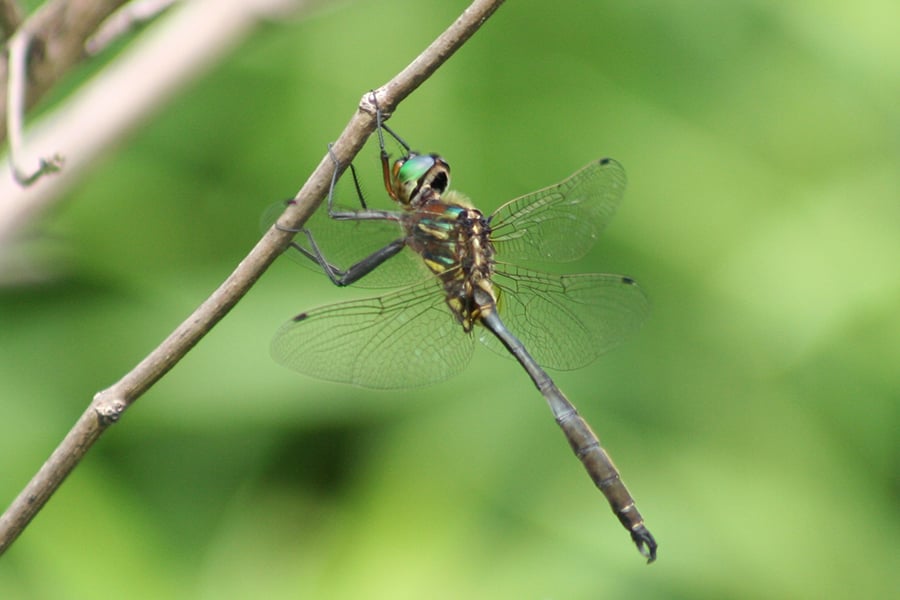
Scientists estimate Illinois habitats produce an average of just 200 adult Hine’s emerald dragonflies each year. But under valuable leadership from the U.S. Fish and Wildlife Service (including a grant in 2016), the Forest Preserve District is now helping to raise these federally endangered insects in captivity.
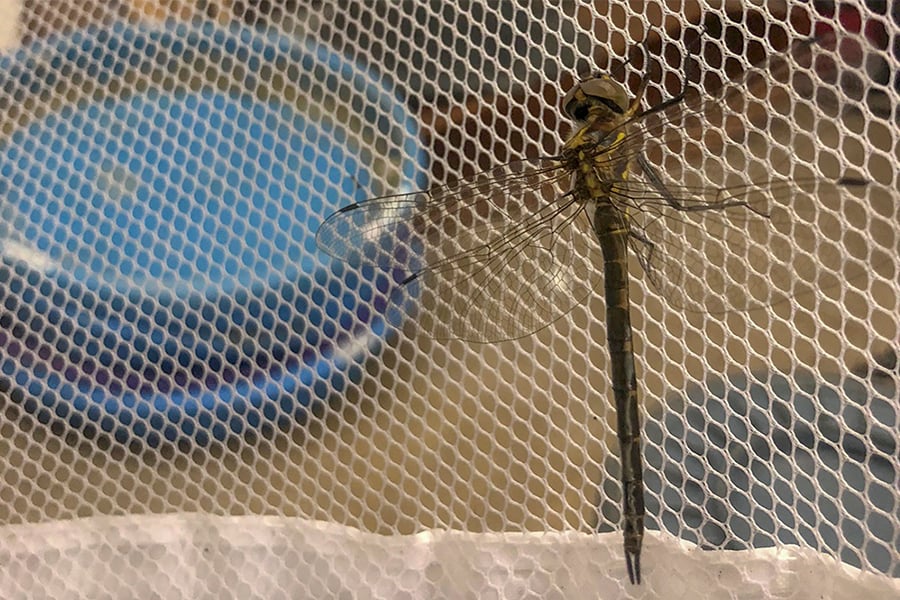
It starts with the University of South Dakota, which collects Hine’s emerald eggs in the wild and raises any resulting larvae for a year or more before sending them to the Forest Preserve District’s Urban Stream Research Center. After two years at the center, the larvae are ready to transform into adults, and ecologists move them to netted “emergence containers” in a DuPage preserve. There, the insects crawl onto the nets and shed their larval skins. Once their winged adult bodies harden, they’re released into the preserve.
By cooperating with other agencies on projects like these, the Forest Preserve District is able not only to operate more efficiently but also to further its mission by creating healthier environments for all inhabitants of DuPage.
Raising Great Plains Mudbugs for Dragonflies
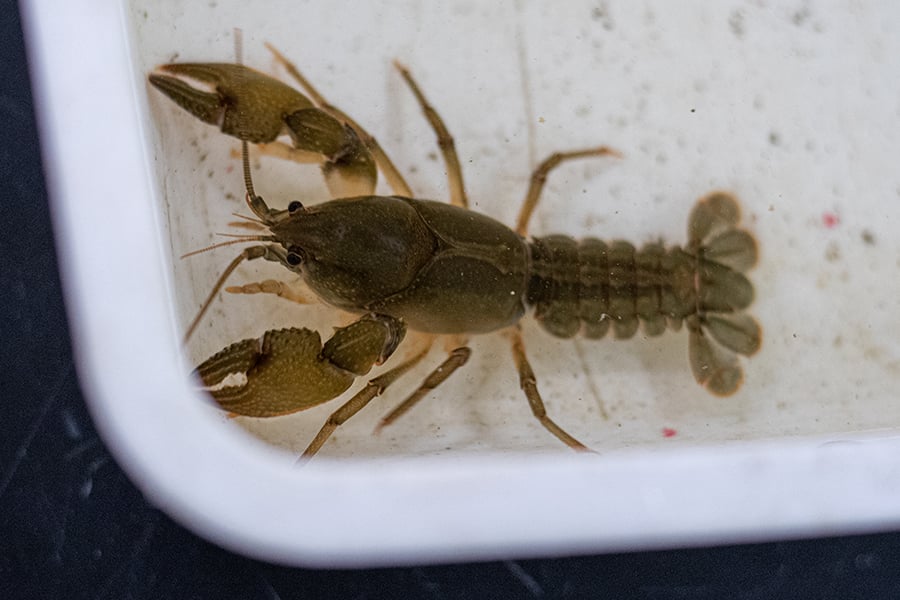
To help Hine’s emeralds, the Forest Preserve District is not only raising the dragonflies for release into the wild but also raising Great Plains mudbugs so future Hine’s emerald larvae will have places to call home.
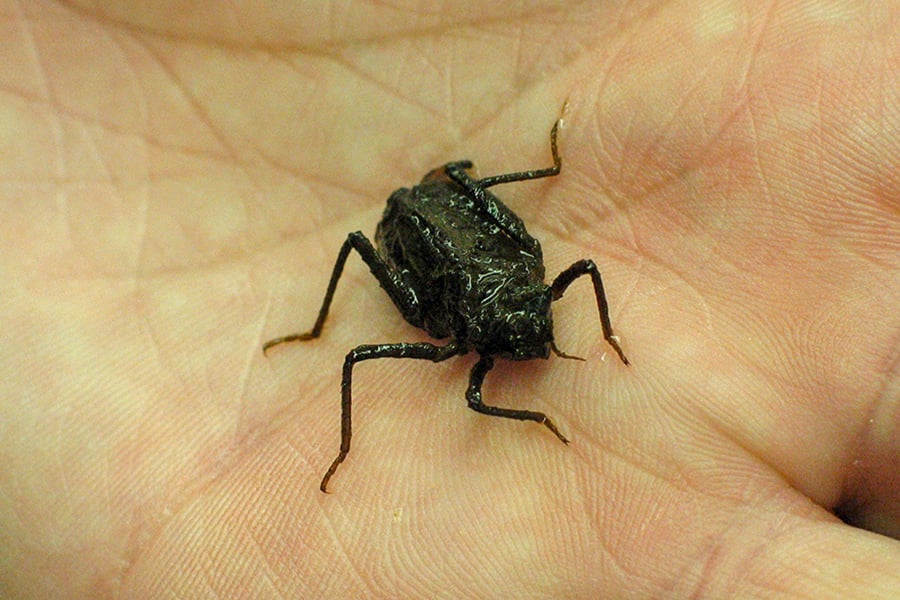
Hine’s emeralds are “aquatic insects.” Adults lay their eggs in the water, and then hatched larvae stay underwater for up to five years as they develop. But Hine’s are picky about the waters they call home. Unlike other dragonflies, Hine’s larvae only live in water at the bottoms of Great Plains mudbug burrows.
One reason for this requirement may be that these crayfish are “primary burrowers.” They build complex burrows deep enough to reach underground water tables below the frost line, which means the water doesn’t freeze. This source of cold open water is critical if Hine’s larvae are to survive winter.
So if an area might be good habitat for Hine’s emeralds but is Great Plains mudbugs and their accompanying burrows, “planting” crayfish is essential. This is where the Forest Preserve District’s new Great Plains mudbug captive-rearing program comes into play. The goal is simple: Raise Great Plains mudbugs in captivity at the Urban Stream Research Center and release them as juveniles in the wild to create breeding grounds for Hine’s emerald dragonflies.

Adult Hine's emerald in an emergence container
Great Plains Mudbug
Hine's emerald Larva
Urban Stream Research Center
The Urban Stream Research Center (USRC) serves as the Forest Preserve District’s facility for aquatic conservation programs and is the only facility of its kind in Illinois. Located where Springbrook Creek enters the West Branch DuPage River in Blackwell Forest Preserve, the building opened in 2012 and was funded by a grant from the National Oceanic and Atmospheric Administration (NOAA). It is the result of a partnership between DuPage County Stormwater Management and the Forest Preserve District.
The center’s main purpose is to augment common native freshwater mussels that were historically more abundant and diverse within the Des Plaines River Basin, but it also supports the rearing of federally endangered Hine’s emerald dragonfly larvae and Great Plains mudbugs.
The center is closed to the public, but does offer open houses on select dates. For other information, call 630-206-9620.