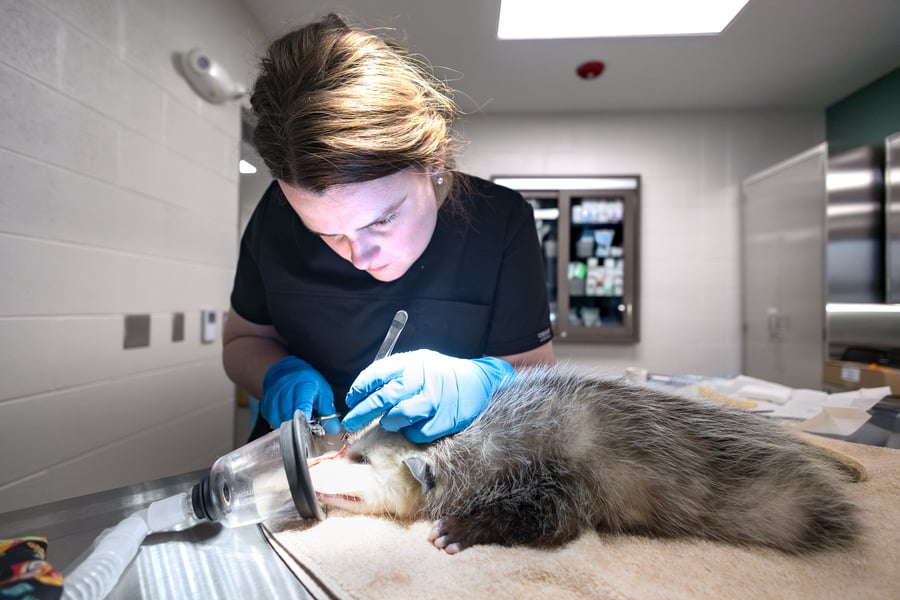
DuPage Wildlife Conservation Center offers a behind-the-scenes look at real-time wildlife rehabilitation. Viewing windows allow visitors to watch exams, surgeries, and, during certain seasons, baby animals being cared for in the new facility.
The idea is to teach community members about the process of wildlife rehabilitation, from the arrival of a new patient to their release. We highlight the species we take in, common reasons they are here, and what we, as community members, can do to help these animals. The visitor center showcases common human-wildlife conflicts and strategies to help us all harmoniously coexist.
When patrons first walk in, they are greeted by friendly staff and volunteers who are happy to answer any questions. A large screen highlights recent work and spotlights patients in our care. Visitors can see an up-to-date patient count to see how the influx of animals changes with the seasons. The visitor center is designed to guide guests on the journey of a patient. It begins with an inside look at our clinic and surgery rooms, where patrons can watch live patient exams and surgeries through large viewing windows. As they make their way along, visitors can read about patient stories and view X-ray slides to see common injuries. The exhibits then focus on the rehabilitation process and the daily care of animals. Adjacent to the viewing windows are displays of the foods they eat and items the animals are given to make their stay as comfortable as possible. During peak season, visitors will be able to see live baby animal feedings.
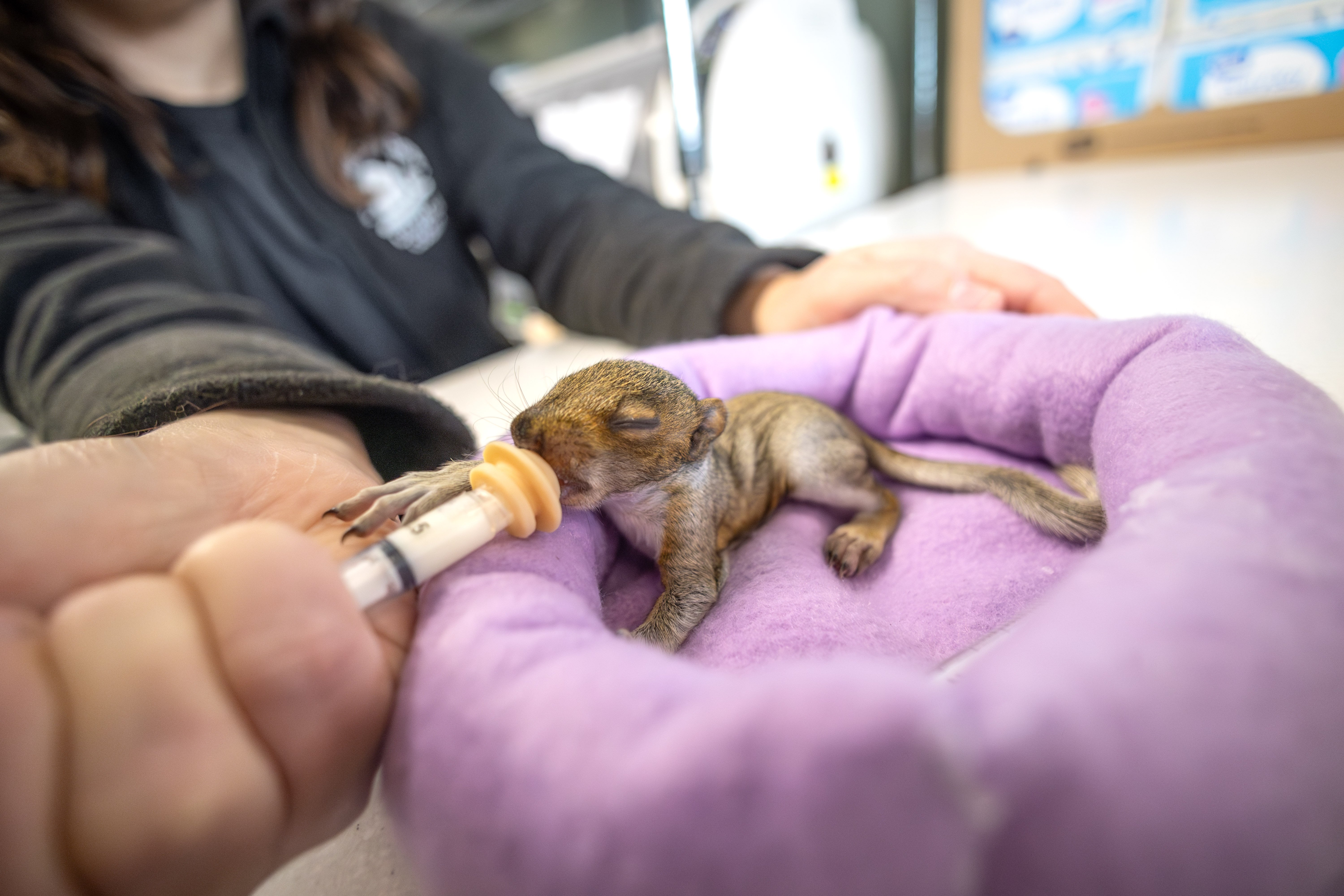
During spring, visitor can watch staff and volunteers feed baby animals, like this young squirrel.
The new center also showcases the District’s large-scale conservation efforts, including prescribed burns, freshwater mussel propagation, and the Blanding’s turtle recovery project. Another information station displays the benefits of the center’s net-zero-designed building, with facts about geothermal heating and cooling, and solar panel energy offsets. Approximately three-quarters of an acre worth of solar panels have been installed atop the roofs of the new buildings and along the new solar field. Those panels are expected to generate more than 735,000 kilowatt-hours annually, or about 110% of the energy needs of the facility.
For schools, scouts, and community groups, the center offers an indoor and outdoor classroom where wildlife interpreters can teach residents about the natural history of local flora and fauna. Nearby, a trail connects visitors to what is known as the back 40 — the roughly 40 acres of natural space behind the building. That area includes a half-mile loop on an ADA-accessible, crushed limestone trail interspersed with interpretive signs highlighting unique features of various ecosystems. Accompanying the new signage is a solar-powered audio system that recites the text aloud in English and Spanish to increase accessibility.
Along with new signage, restoration efforts have been made to remove non-native woody vegetation — primarily honeysuckle and buckthorn — and promote growth of native trees and grasses. New plantings and seed dispersal allow visitors to see changing scenery throughout the seasons. An outdoor setting blanketed in bright white snow offers opportunities to observe animal tracks or take in the natural beauty of the landscape. During the spring, migrating birds visit the variety of oaks, hickories, and cottonwood trees to feast and refuel, providing chances to spot noteworthy species. The summer season showcases bright yellow prairie plants in full bloom before fall ushers in red and orange hues.
Each time community members visit the restored Willowbrook forest preserve and the new DuPage Wildlife Conservation Center, there is potential for novel experiences. Whether it is the patients being treated or the wild visitors and residents of the recently restored natural space, patrons will be presented with educational, recreational, and enriching experiences. The intention is to highlight the center’s work by giving people an inside look at the animal rehabilitation process while providing insight and resources for the community to ensure people and wildlife live together symbiotically. The hope is to have residents visit the center and forest preserve again and again.
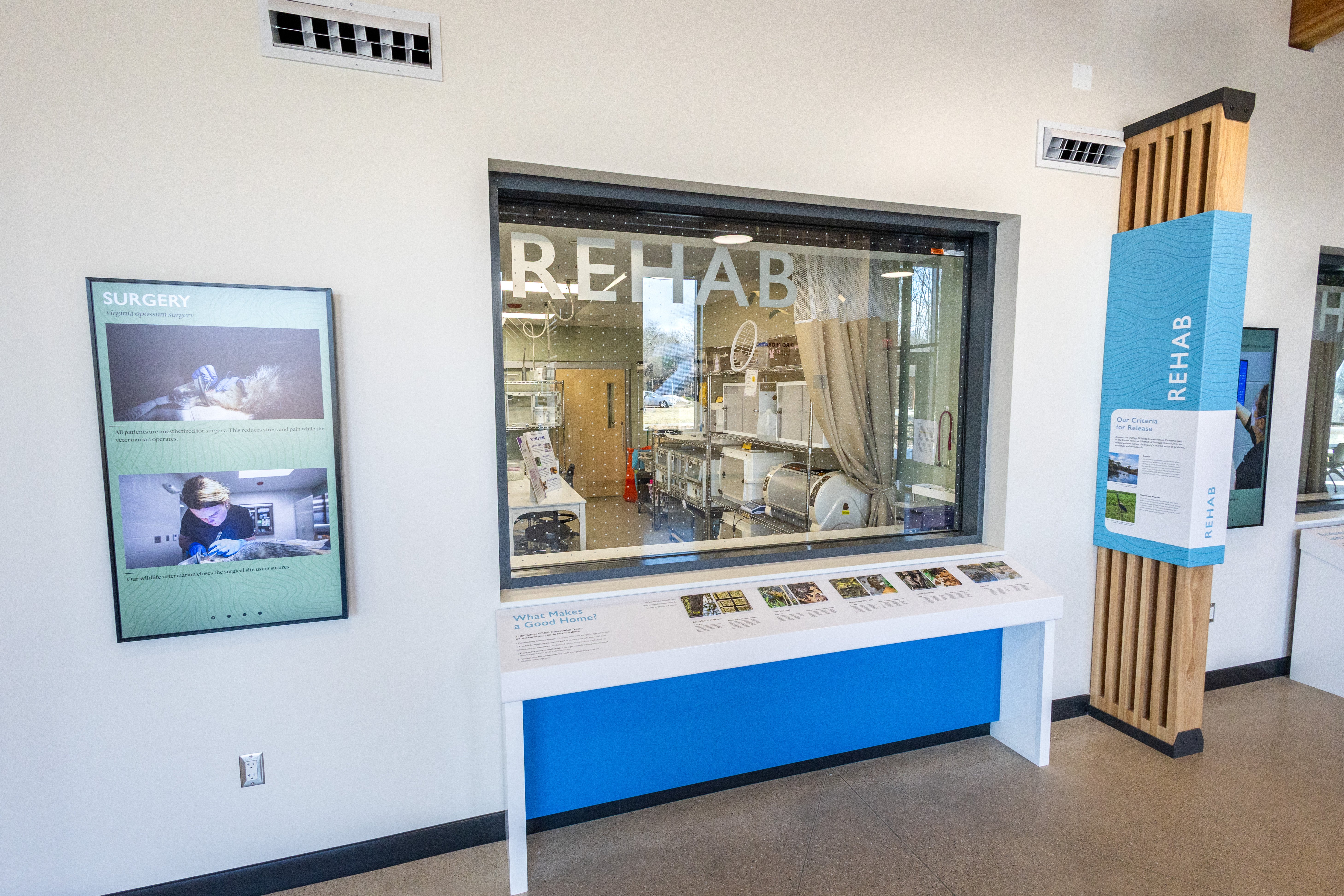
The windows at DWCC are outfitted with dots to help prevent birds from crashing into them.
Nate Hambel