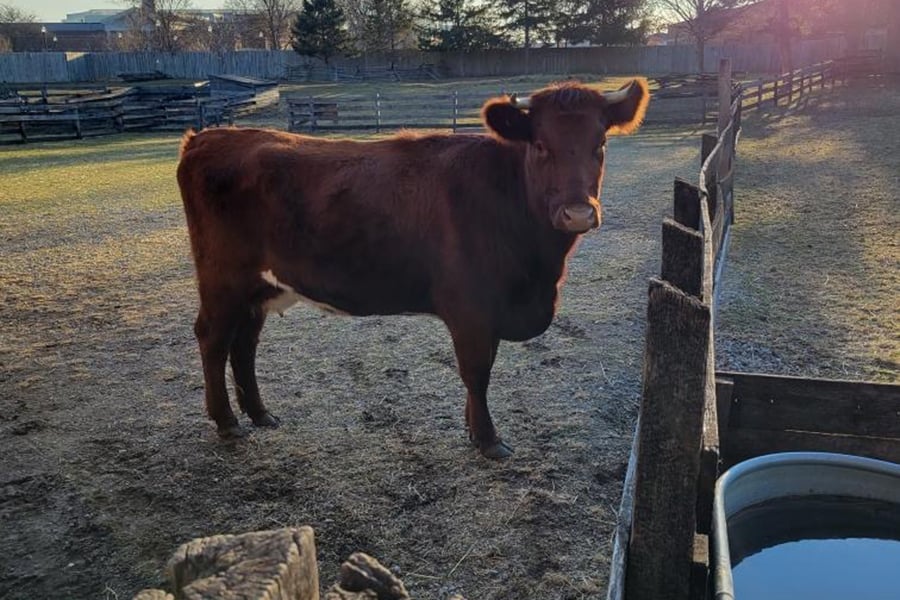
Kline Creek Farm maintains a heritage livestock breeding program to display the types of breeds commonly seen on an 1890s DuPage County farm while preserving heritage livestock genetics. These breeds, once a common sight on Midwestern farms, are now considered endangered as modern agriculture has moved toward fast-maturing, high-producing breeds designed to thrive in high-input environments.
Kline Creek Farm breeds Heritage Shorthorn cattle and Cotswold sheep and has recently ventured into breeding Berkshire hogs. The Livestock Conservancy, a nonprofit based in Pittsboro, North Carolina, takes a census of historical livestock breeds and creates an annual “Conservation Priority List,” which includes both Heritage Shorthorns and Cotswolds. Today, heritage breeds are raised at historical sites, as well as on small farms where their low-input and hardy genetics are appreciated.
The Livestock Conservancy calls the Shorthorn “the most famous and influential breed of cattle in the history of agriculture worldwide,” but the cattle are now considered a rare breed. Shorthorns are the classic dual-purpose breed, bred for beef and dairy. Today, cattle are bred to excel at one or the other. Shorthorns were also historically a favorite breed to use as oxen to provide draft power for logging and agriculture, though working cattle were replaced by faster horses on most northern Illinois farms by the late 1800s.
The Kline farm was primarily a dairy farm in the 1890s. Milk from the farm’s cattle was sold to the Winfield Cooperative Creamery, which then sold dairy products to the local community. Dairy products were a major commodity in the Chicago hinterlands. The Chicago and North Western Railroad ran a daily milk train to Chicago along what is now the Great Western Trail. In 1890, Fox River Valley dairy farms shipped 25,000 gallons of milk on this rail line daily.
Kline Creek Farm keeps this dairy legacy alive by using heritage cattle in its programming. In spring and summer, visitors can watch staff hand-milk the Shorthorns in the barn’s parlor, as it would have been done in the 1890s. The cows are fed in the barn while their heads are comfortably locked into wooden stanchions to keep them in place during milking. Cows need to be handled and trained to be milked. Kline Creek Farm staff starts working with the cattle when they’re small calves so they’re easier to handle when they reach 1,300 pounds.
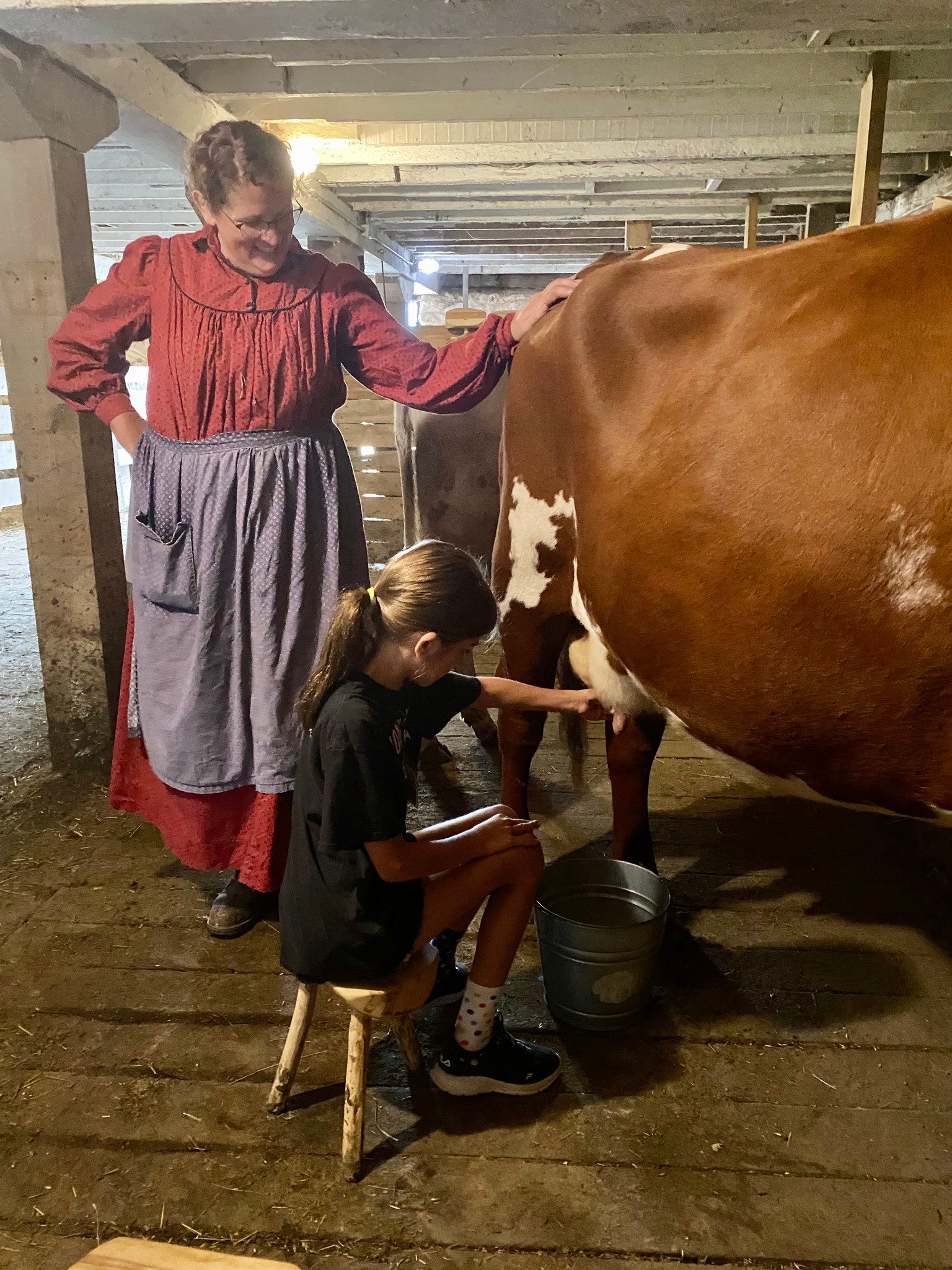
Shorthorn cattle are a dual-purpose breed, bred for both dairy and meat.
Kline Creek Farm has placed Heritage Shorthorn breeding stock with breeders in Illinois, Indiana, Ohio, New York, and most recently in Greenfield Village, part of the Henry Ford Museum complex in Dearborn, Michigan. Greenfield Village had been searching for a horned Heritage Shorthorn for their 1885 Firestone Farm, the relocated boyhood home of Harvey Firestone, who founded the Firestone Tire and Rubber Co. and associated with Henry Ford. Most modern cattle breeders dehorn their animals, so it can be difficult to find Shorthorns with their horns intact. Kline Creek Farm breeds for a historically accurate animal and leaves the horns on the cows as most farmers did in the 19th century.
Alongside the livestock breeding program, Kline Creek Farm maintains old-style Percheron draft horses. Percherons are tied to the history of this area, as the renowned Percheron importer and breeder Mark Dunham had his Oaklawn Farm in nearby Wayne. Today, it has become difficult to find old, farm-style Percherons, as the competitive hitch-horse world has bred them to be tall and leggy for show. Kline Creek Farm usually sources Percheron drafts from the Amish community, who still value a Percheron built for farm work. Kline Creek Farm also maintains a flock of heritage-breed chickens and sells eggs from those birds in the visitor center.
Spring lambs, calves, and piglets are born on the farm each year. Draft horses work the fields during the growing season and haul ice in winter. These animals are tangible connections to our agricultural past, and the heritage livestock program at Kline Creek Farm regularly instills new life into the old farm.
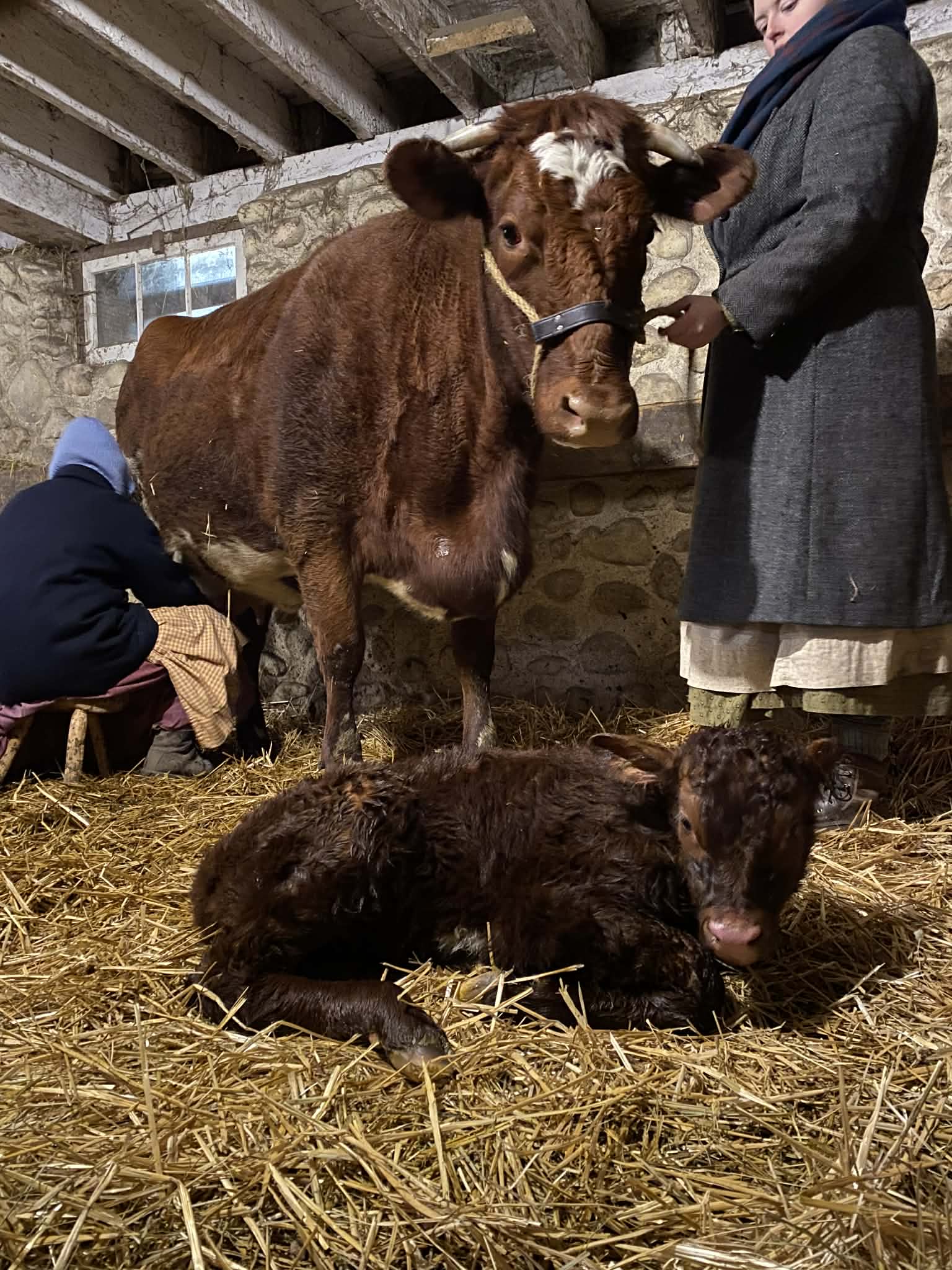
The District's livestock program helps preserve historical breeds.
Lisa Carpenter