
Sometimes a small repair morphs into an extended project. This is especially true when dealing with a century-old home like Mayslake Hall, part of the Mayslake Peabody Estate at Mayslake Forest Preserve.
During the last major restoration, Forest Preserve District contractors sealed the exterior of the building, checking the roof and repairing leaks, fixing exterior tuck pointing, and cleaning, repairing, and reinstalling the windows.
On March 1, Mayslake Hall will again close for extensive work, this time on the building’s HVAC system, which will include adding or moving cooling and heating vents in the walls and ceilings.
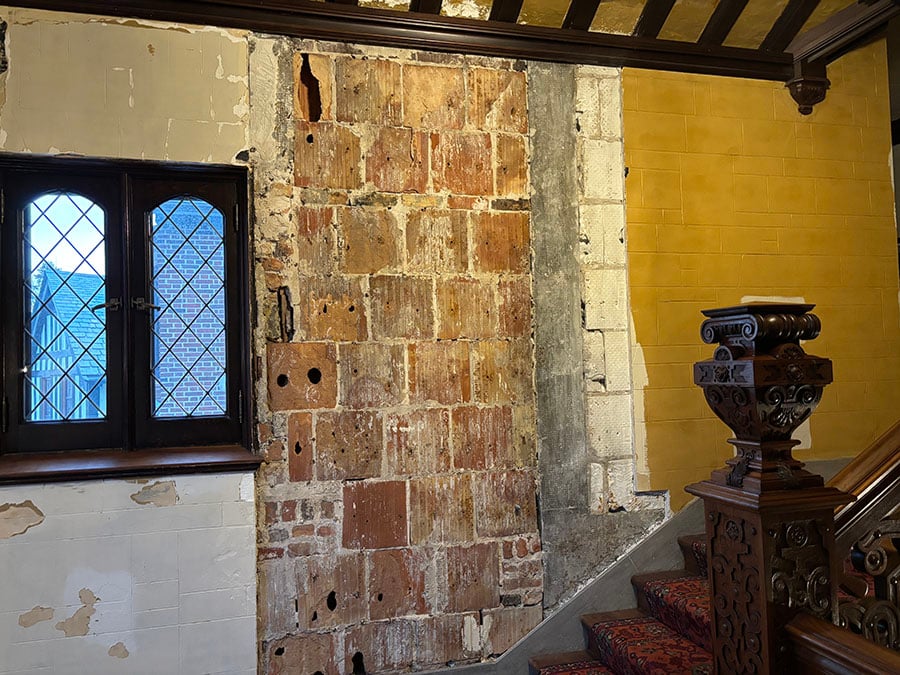
This brings us to a conspicuous section of wall on the second floor near the main stairs that suffered water damage from previous leaks. The plan was to work on the plaster walls in a future phase after the HVAC work to avoid redundant repairs; however, when Forest Preserve District staff checked the wall, they noticed it needed more timely maintenance.
District tradespeople stripped the plaster from the wall, exposing the masonry layers. Then they filled or patched holes, sealed leaks, and added a layer of mesh lath, providing a structure for plaster to adhere to.
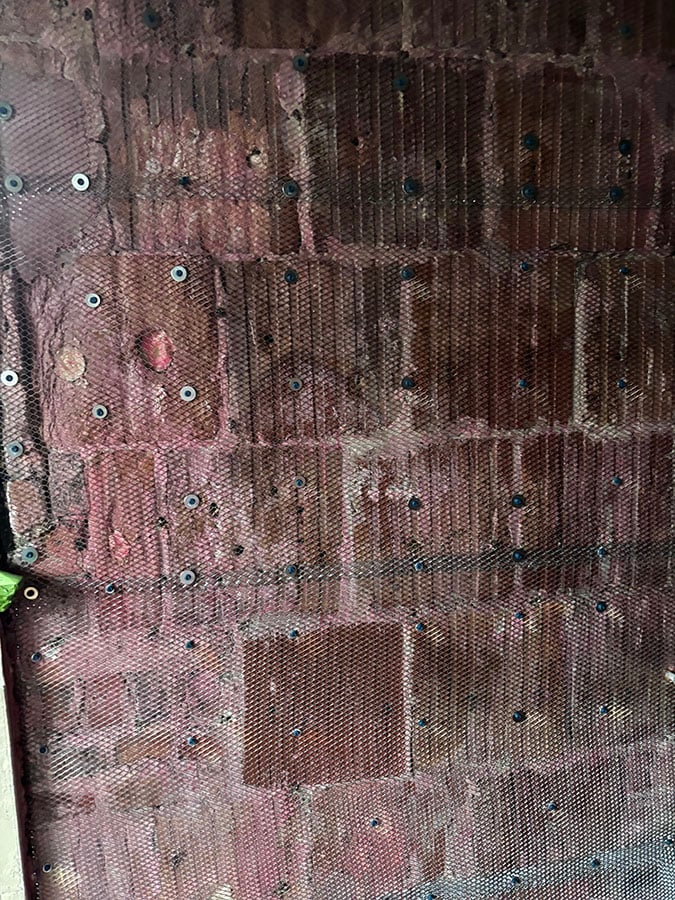
After filling holes and leaks, workers installed a mesh lath, which helps plaster adhere to the wall.
Finally, two to three layers of plaster were added to the wall. This made the wall semi-smooth and stabilized the section, allowing a handrail to be reattached.
Eventually, this section and the rest of the second-story walls of the building listed on the National Register of Historic Places will be restored to their former glory, but that will be in a future phase, after the HVAC updates in 2026.
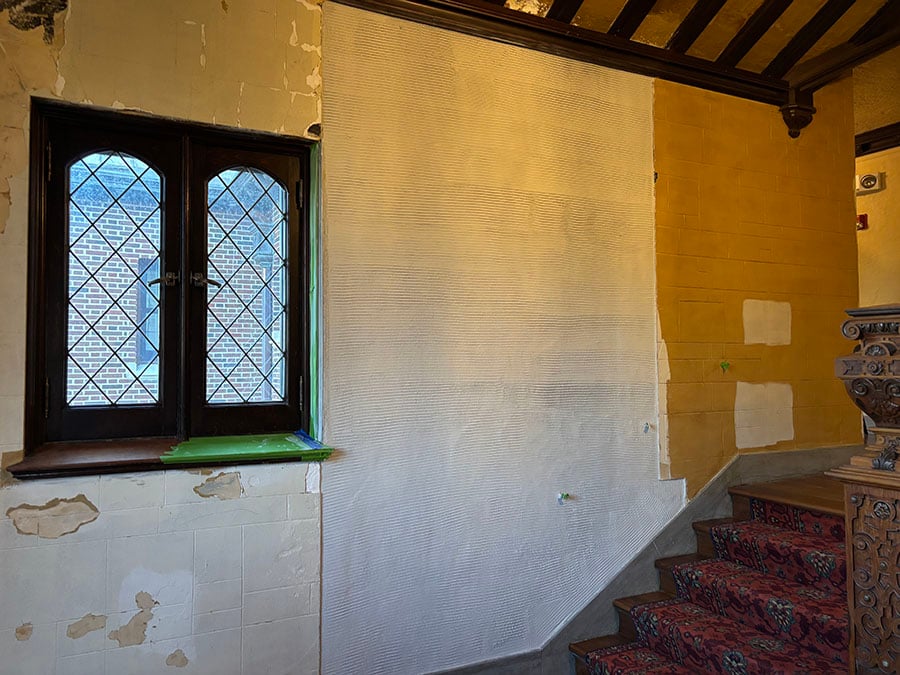
Layers of plaster smooth out the wall and provide a surface to attach a hand railing.