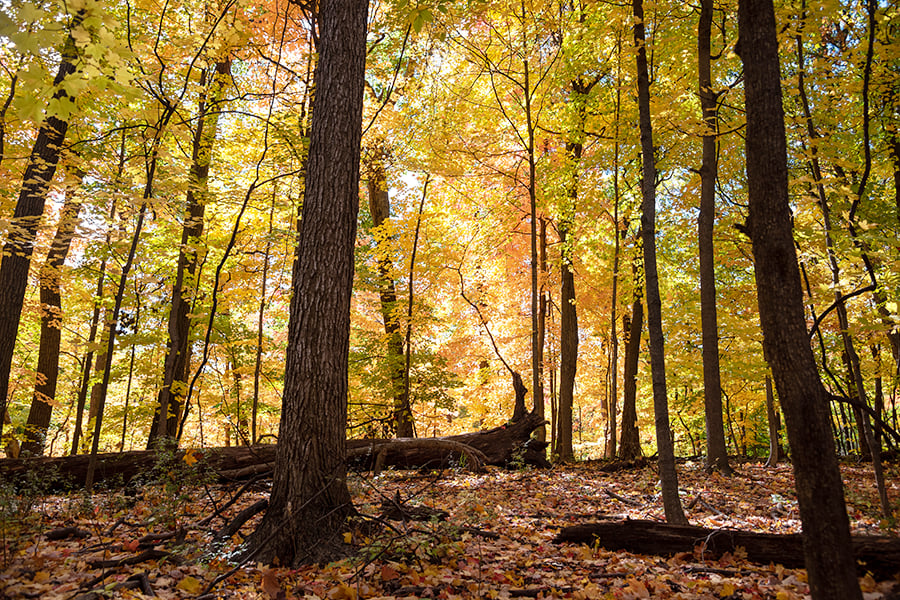
Fullersburg Woods Forest Preserve Master Plan
Project Purpose
The development of individual forest preserve master plans was identified as an important initiative in the 2019 districtwide master plan. Master plans for each preserve will improve the quality of future projects and ensure support from the public, the District’s board of commissioners, and staff. The plans will also increase grant opportunities, assist with the budget process, and help prioritize and phase potential work.
The master planning process can be broken down into five phases:
- Phase 1: Information Gathering — Collect data, conduct site visits, and gather board, staff, and public input
- Phase 2: Analysis & Goal Development — Analyze site conditions and define goals and objectives
- Phase 3: Master Plan Development — Create draft plans, cost estimates, and potential project phasing and identify potential grant opportunities
- Phase 4: Plan Review & Refinement — Review draft with board, staff, and public; refine plans
- Phase 5: Final Plan Delivery — Finalize the plan document and obtain board approval
Once complete, each forest preserve master plan will include maps and cost estimates for all proposed improvements.
Public Input
Public input is an important part of the master planning process. Online surveys will be offered at key milestones and shared on this webpage as they become available. A public input meeting was also held as part of the information-gathering phase, and the presentation is available above. Feedback gathered through the meeting and surveys will help guide the development of the draft master plan.
Background
The area around Fullersburg Woods was originally known as Brush Hill but was renamed Fullersburg after Jacob Fuller, and his son, Benjamin, who platted the town in 1851. Fullersburg Woods opened to the public in 1920 and has a rich history. In the 1930s, a Civilian Conservation Corps camp was built here, and the visitor center and several of the shelters stand as remnants of that period. In subsequent years, the preserve was so heavily used that in 1969 picnicking was restricted and boating was prohibited because discharges and water runoff from surrounding communities polluted Salt Creek.
It was at this time that Fullersburg’s revival began. Dedicated to multiple-use land management, the Forest Preserve District implemented plans to restore and preserve the natural surroundings, improve flood control, and provide environmental education. As a result, the creek’s water quality has improved, trees and other plant communities are thriving, and a restored prairie adds to the preserve’s diversity.
Today, Fullersburg Woods encompasses 220 acres of high-quality natural areas within an urban setting. The preserve offers miles of trails, boating and fishing access to Salt Creek, and numerous picnic areas and shelters. It is also home to the Fullersburg Woods Nature Education Center, Graue Mill and Museum, and the Ben Fuller House.
Status
The master plan is currently in the information-gathering phase. After public input meetings are complete and online survey responses are collected, the District will compile the information and begin the analysis and goal development phase.
A draft master plan is anticipated in winter 2026 for review by the Board of Commissioners, staff, and the public, with final adoption by the board expected in late winter 2027.
Questions?
Contact Matt Adams, preserve project manager, at 630-871-6424 or madams@dupageforest.org