
With America’s semiquincentennial upon us, it seems the perfect time to look back on the past 250 years of the land that is today’s Forest Preserve District of DuPage County. This blog, the first in a series examining the people, land, and wildlife of the area, will start things off by focusing on the period between 1776 and 1832.
From 1776 to 1832 DuPage County was primarily inhabited by the Potawatomi, Kickapoo, Miami, and other Algonquian-speaking peoples, who had lived in harmony with the land for centuries. One of the most prominent tribes, the seminomadic Potawatomi, had settlements in today’s Fullersburg Woods and Churchill Woods forest preserves. Tribes viewed the land as sacred, connecting it to their spiritual and cultural identities. Their ceremonies and rituals honored the natural world, and they viewed rivers and other features as spiritual entities.
The people who lived here during that time hunted, fished, and farmed, using pathways and river systems for transportation. Rich forestlands provided hunting grounds for deer and wild turkey; berry- and nut-bearing plants yielded additional sources of food. But tribes also practiced subsistence agriculture — growing enough food to feed themselves with little to no surplus — cultivating crops such as corn, beans, and squash, referred to as the “Three Sisters.” Their knowledge of the land helped them manage their resources, ensuring that hunting grounds, wetlands, and forests remained bountiful.
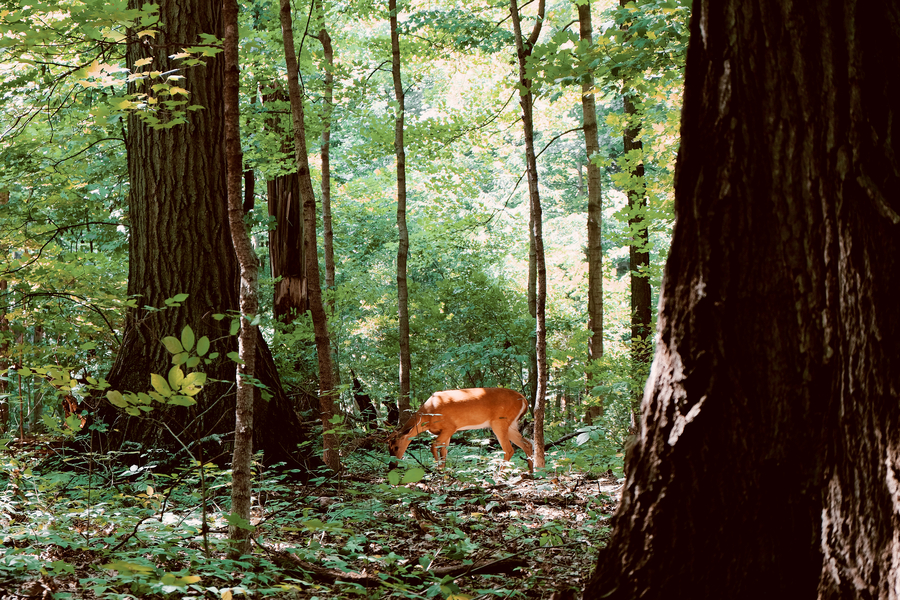
Forests provided habitat for various game species, including deer.
About 15% of DuPage County was covered by oak and maple forests at the time, although concentrations were higher on the west side of the county. Hickory and elm trees grew here, too. These richly biodiverse forests offered shelter and food for a variety of wild animals.
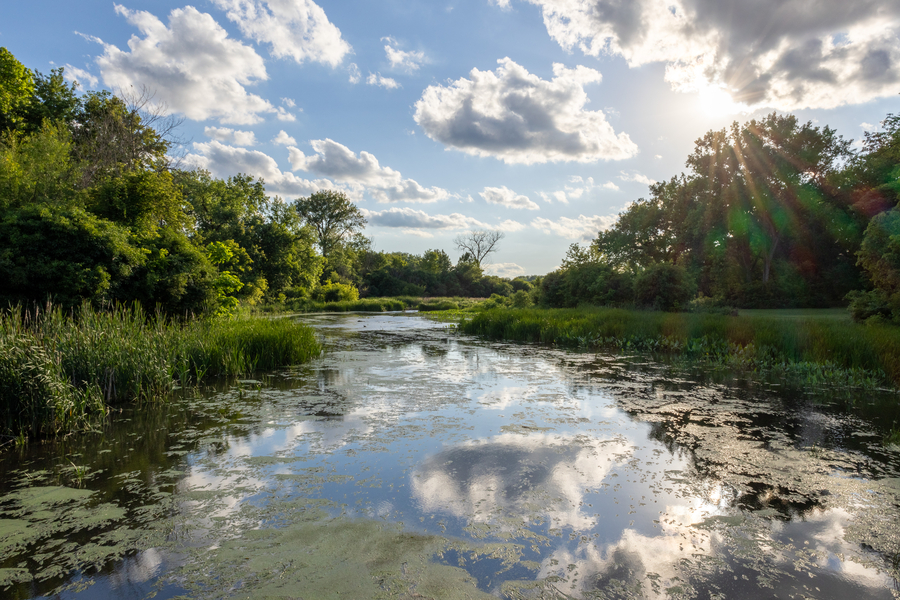
The region was also defined by wetlands and waterways. Salt Creek and both branches of the DuPage River provided vital drinking water and travel corridors for humans and wildlife alike.
But like much of Illinois, DuPage County was dominated by prairie. These open, expansive grasslands interspersed with wildflowers provided abundant food for large herbivores and smaller creatures alike.
Because of the variety of ecosystems, late 18th century DuPage County supported throngs of animals that remain symbolic of Illinois' natural heritage. Herds of bison — mighty creatures weighing up to 2,000 pounds — roamed the prairies, sculpting the landscape through their grazing habits. The area’s elk and deer, particularly prolific in forested areas, were highly regarded game for both Native American tribes and early European settlers. Smaller mammals such as raccoons, opossums, and foxes lived here as did beavers, which reshaped the landscape with wetlands created by the dams they instinctively built and maintained. In these and other marshy areas, frogs, turtles, and snakes helped to control insect and rodent populations.
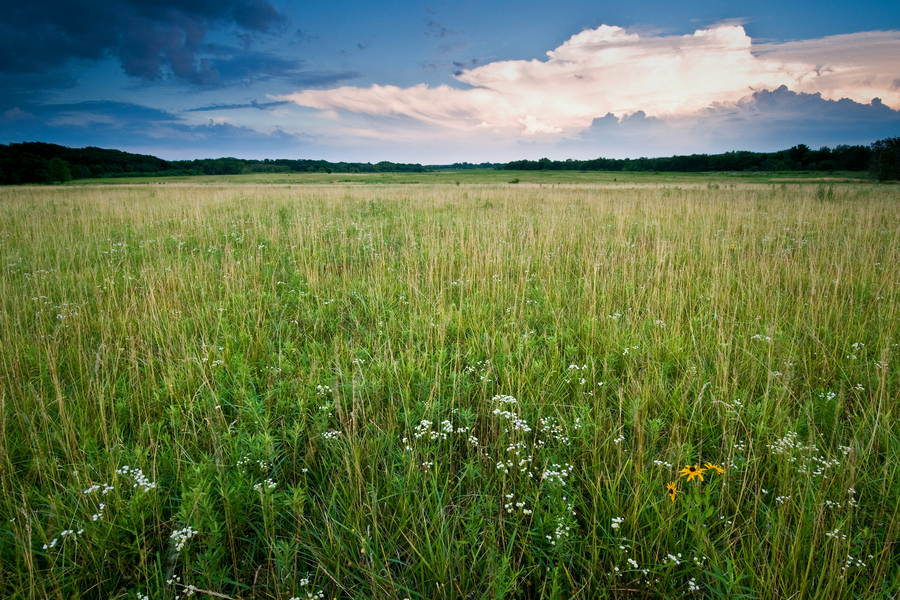
Most of DuPage County was open prairie where herds of bison once roamed.
The land sustained winged species as well. Migratory birds such as ducks, geese, and herons made the region an essential stop on their seasonal journeys. Hawks, owls, and eagles roamed the skies, hunting smaller mammals and birds. Butterflies and bees supported biodiversity by pollinating wildflowers as well as crops, and mosquitoes, though often a nuisance, maintained their role as vital links in the greater food chain.
Eventually, this period with relatively little human influence would come to an end, and in its place would be an influx of settlers from Europe and a time of great change to the land we now call DuPage County.
This is the first installment of a four-part blog series detailing the people, land, and wildlife of DuPage County during America's first 250 years. Click the links below to access the other blogs.