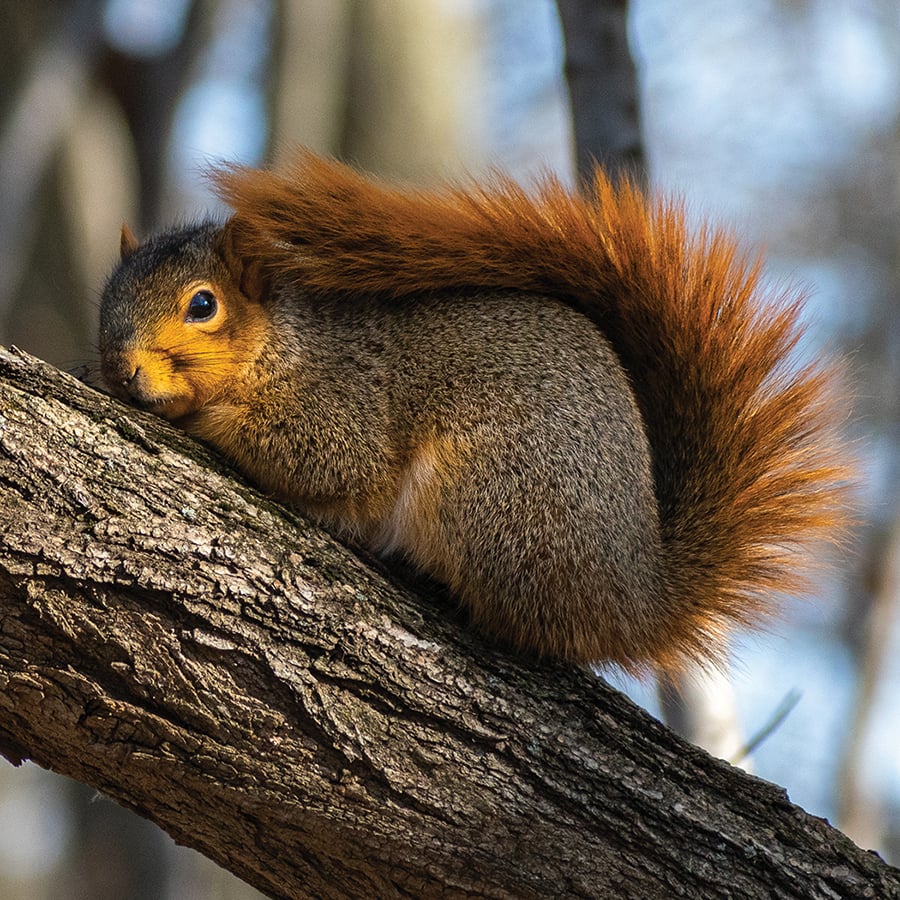
They are menacing foes to a furry four-legged Oscar, Maxx, Moose, or Chili Dog, but DuPage County’s tree squirrels — eastern gray, fox, American red, and southern flying — have some truly impressive traits. Here are 10 you may not know.
- The Flick Test
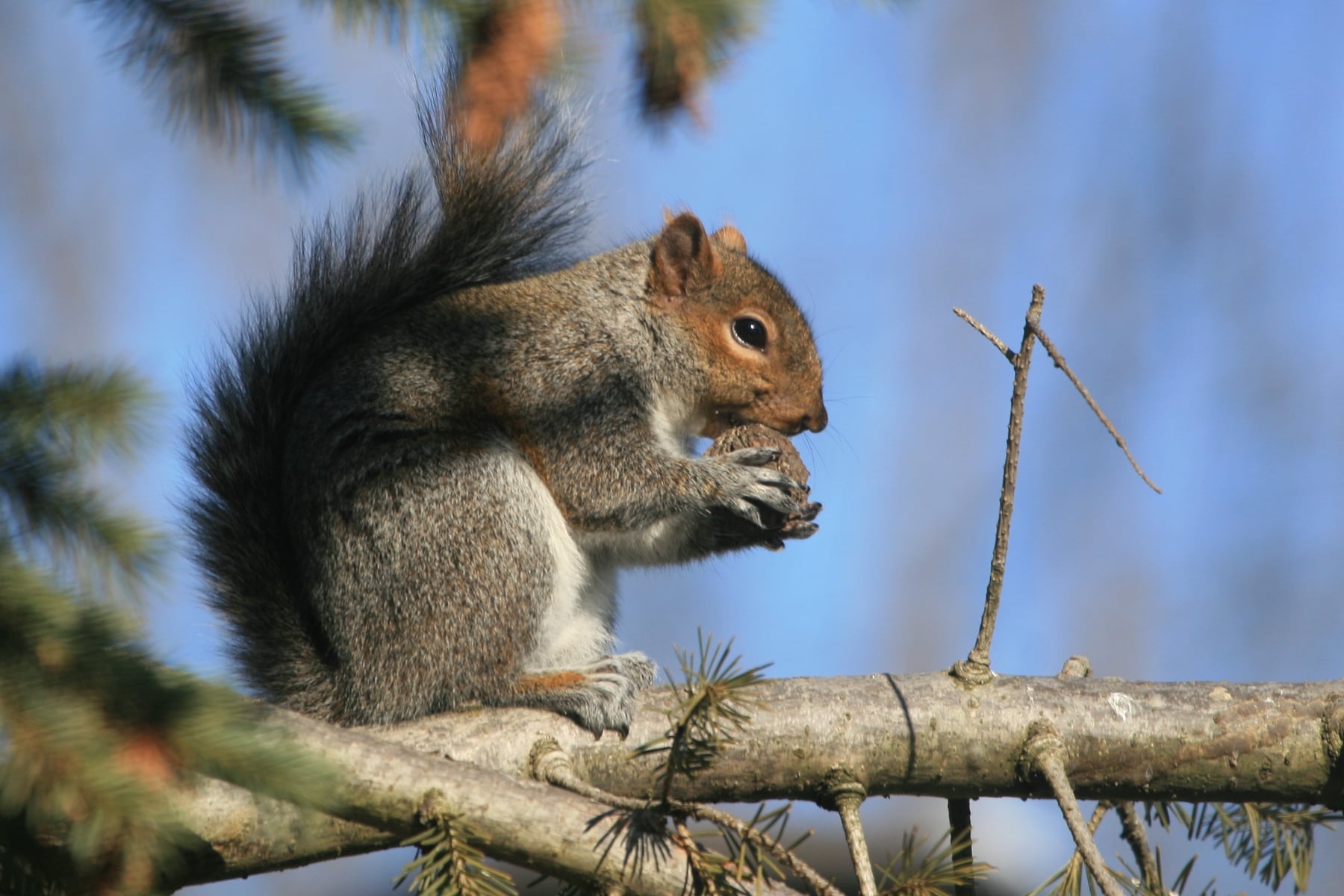
To determine if a nut is fresh, a fox or gray squirrel will put it in its mouth and flick its head, causing the nut to rattle. This helps the squirrel determine the weight of the nut and, along with smell, its freshness. If it rattles a lot it may be dried up or infested with insect larvae and not worth stashing away for winter. In the case of larvae, the squirrel will usually eat it right then for a quick protein snack.
-
Hard-wired Whiskers
A squirrel’s whiskers, called “vibrissae,” are rooted in sensitive follicles that amplify the slightest touch and send signals straight to the brain. Squirrels even have them on their forearms. They help squirrels navigate and register textures.
- A Coat of a Different Color
The black squirrels people sometimes see in DuPage are just eastern gray squirrels with “melanism,” an increased amount of dark pigmentation. This black variation is dominant in densely shaded northern forests (think Michigan). Researchers believe it not only provides better camouflage but may also help squirrels absorb more heat on sunny winter days.
- Hey Rocky!
Southern flying squirrels don’t actually fly; they glide. A flap of furry skin called a “patagium” stretches between their wrists and ankles and serves as a gliding membrane. As a squirrel launches off a tree, it stretches its limbs and uses its patagium like a parachute to silently glide to the next trunk. It can coast as far as 100 feet, but 20 to 30 feet is more common. Super fun bonus fact: These squirrels glow bubblegum pink under ultraviolet light, although researchers have yet to determine why they developed this trait.
- Hang Tight
Tree squirrels can rotate their back feet 180 degrees, allowing them to run down trees (and even hang) head-first. This helps them keep a better eye out for predators on the way down.
- Fox or Gray?
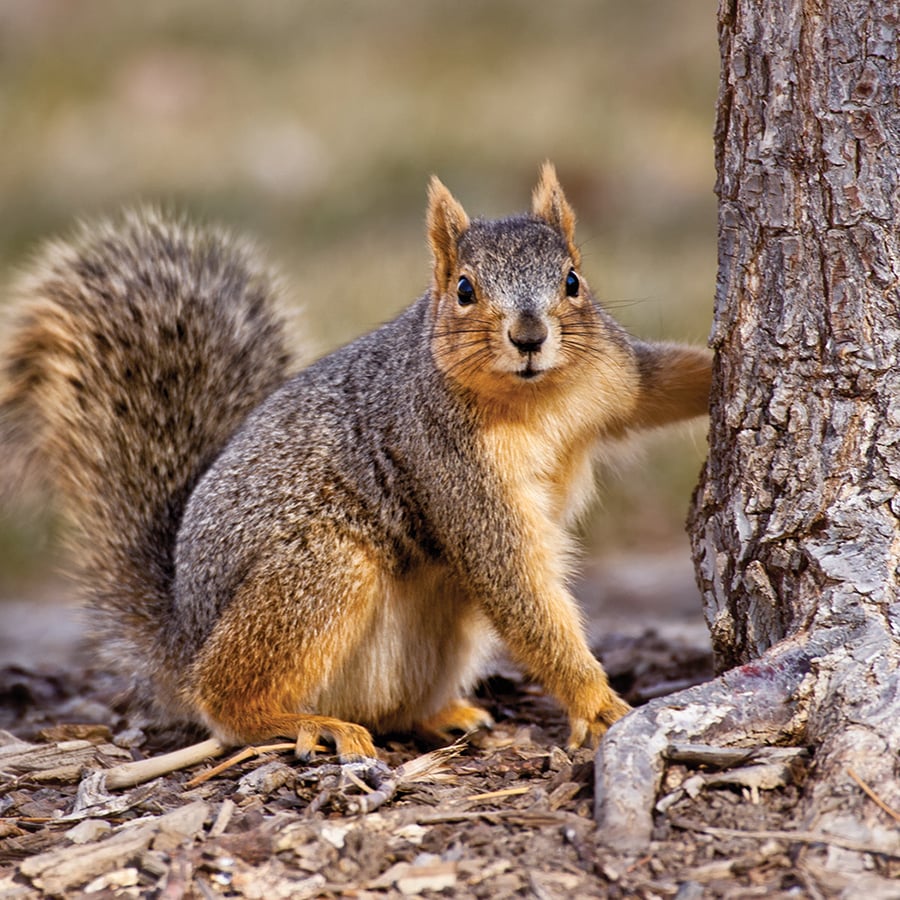
Fox and eastern gray squirrels are quite similar. Generally, though, gray squirrels are whitish underneath. Fox squirrels, like the one to the right, have orangish or tan bellies.
- Just Chillin'
Don’t be surprised if you see a squirrel “splooting” on a hot summer day. (Yes, that’s what researchers call it, although it’s also known as “heat dumping.”) Unlike humans, squirrels can’t sweat to cool down. So aside from seeking shade, a squirrel will spread its body along a cooler surface to lower its temperature.
- Chatter Boxes
At about a foot long (tail included), adult American red squirrels are often mistaken for juveniles. They’re easy to ID, though, by the white rings around their eyes and their rapid, trilling, high-pitched chatter, which they use to signal territories and to tell other wildlife (and wildlife watchers) to move along.
- Art of Deception
Eastern gray and fox squirrels practice “deceptive caching.” If they see another animal watching them, they’ll dig a hole and pretend to bury their food but will keep their stash safely tucked inside their mouths. This can cause a hungry bird or other competitor to waste time digging for food that isn’t there and allow the squirrel to hide its cache unseen somewhere else.
- Shady Characters
Squirrels are members of the aptly named Sciuridae family, which comes from the Greek skia, meaning “shadow” or “shade,” and oura, meaning “tail.
Forest Preserve District of DuPage County