Skip to navigation Skip to content

Conservationist Fall 2026

From the President

Headshot of a brunette man in a suit and tie.

The fall offers a chance to experience the dramatic beauty of our preserves as they shift in color and texture. While leaves transition to spectacular hues of amber, yellow, and red, they provide a soundtrack to the season as they crunch and crinkle under our walking shoes.

Remarkably, these sights and sounds can improve our overall wellness. While most of us are familiar with the physical benefits of exercising, it’s also important to know that time in nature can reduce stress, improve sleep quality, and lower the risk of psychological disorders, according to the American Psychological Association. Even just basking in the sounds of nature can lead to increased cognitive functioning, the agency noted.

A great way to experience this season’s beauty and reap the corresponding health benefits is to sign up for an outdoor program. I’m a fan of our staff-led hikes that wind through different preserves and include fun facts about the landscape. Listed in the calendar on the proceeding pages are a variety of options including “Forest Hike,” “Wednesday Wilderness Walk,” and my personal favorite this season, our “OAKtober Walk” on Oct. 25.

I also enjoy stopping by a preserve after a day at the office for a short walk or a few minutes on a bench to reflect on the positives and hardships of the day, knowing I do so in a safe space patrolled by our excellent law enforcement officers. It is also important to note that our officers are trained and willing to help someone suffering a mental health crisis. They are a part of a network of mental health resources in DuPage County. I believe our forest preserves are also a part of that network, as they provide residents a place to clear their minds, reduce stress levels, and boost their well-being.

Daniel Hebreard
President, Forest Preserve District of DuPage County

News & Notes

SOLARBRATION at District Headquarters

In September Forest Preserve District commissioners, staff, and guests celebrated the on-line operation of a new four-row solar array at headquarters at Danada. The array will annually generate over 527,000 kilowatt-hours of electricity, enough to power the building and feed excess energy into the community power grid.

The system supports the District’s Clean Energy, Resiliency, and Sustainability Plan, established to ensure the forest preserves continue to benefit people and wildlife for generations to come. It’s also part of the District’s growing “solar circuit,” which includes the DuPage Wildlife Conservation Center, the Danada Equestrian Center, and The Preserve at Oak Meadows.

F Lightswitch

DISTRICT ECOLOGISTS RELEASE 50,000TH MUSSEL

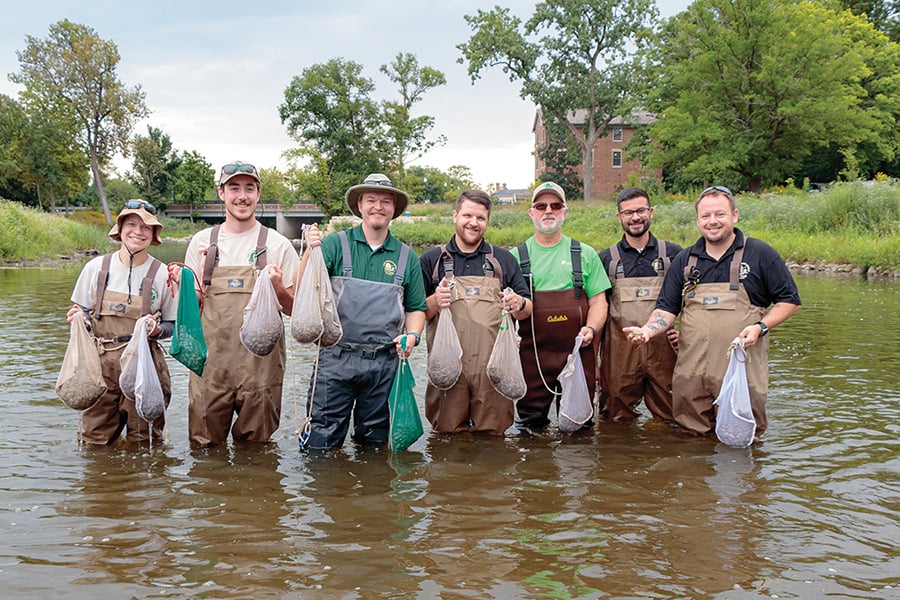
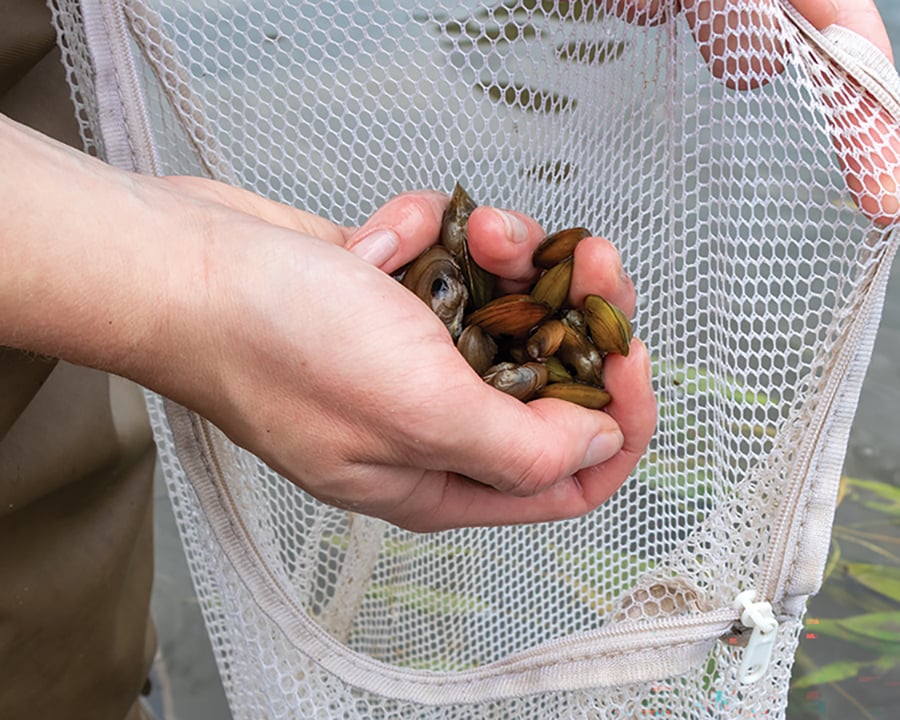
This past August the Forest Preserve District released the 50,000th native freshwater mussel bred and raised by ecologists at its Urban Stream Research Center in Blackwell. The landmark event was along Salt Creek at Fullersburg Woods. Over the past decade the District has added mussels along both branches of the DuPage River, various tributaries, and waterways managed by partnering counties.

The release was also significant because it would not have been possible without efforts by the Forest Preserve District, the DuPage River Salt Creek Workgroup, and the Metropolitan Water Reclamation District of Greater Chicago to improve water quality along Salt Creek. Beginning in 2020 the DuPage River Salt Creek Workgroup spearheaded an ambitious plan that, in part, removed a 90-year-old dam, installed oxygen-generating riffles, and added 50,000 native wetland plants.

Although vital to keeping streams, lakes, and rivers clean, freshwater mussels are the most imperiled group of wildlife in North America. Raising them in captivity requires not only customized aquatic systems but also tanks of specific host fish, a must for the mussels’ complex development cycle. Both elements are at the heart of the Urban Stream Research Center, the only facility of its kind in Illinois.


F handful of mussels
F group in waders

Collections Corner

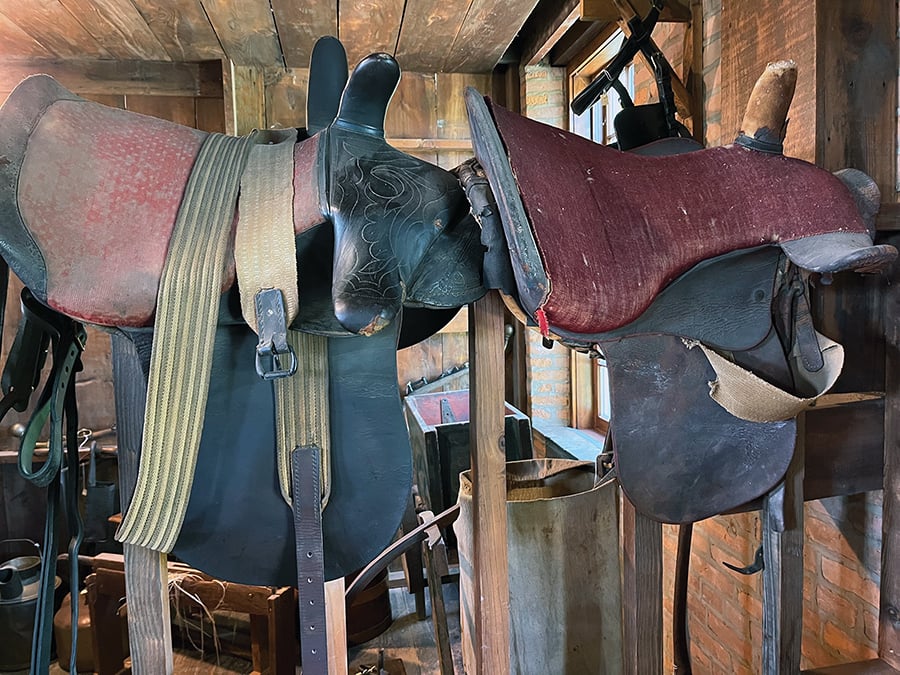
This saddle, known as a “side saddle,” belonged to Valentine Lehman, whose construction company worked on the Illinois and Michigan Canal near Willow Springs, Summit, and Lemont from 1835 to 1848. Lehman’s grandson donated the saddle and other equestrian pieces to the Graue Mill and Museum’s collection.

A side saddle lets a person ride “aside” rather than “astride,” sitting with both legs over one side of the horse instead of one on either side. Riding aside was primarily done by women because riding astride was considered awkward and unbecoming in a skirt or dress, but for decades it meant a rider had little control over the horse. However, in the 1830s, the invention of the two-pommel design (a pommel being the slightly raised area in the front of a saddle) increased stability and made it easier to ride aside while still controlling the horse.

F sidesaddle

A Milestone for a River Remake

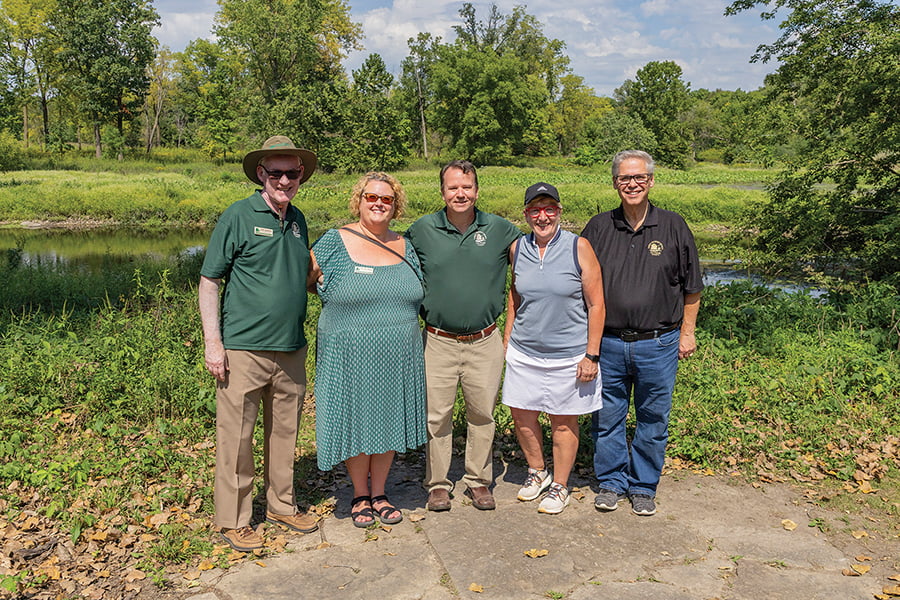
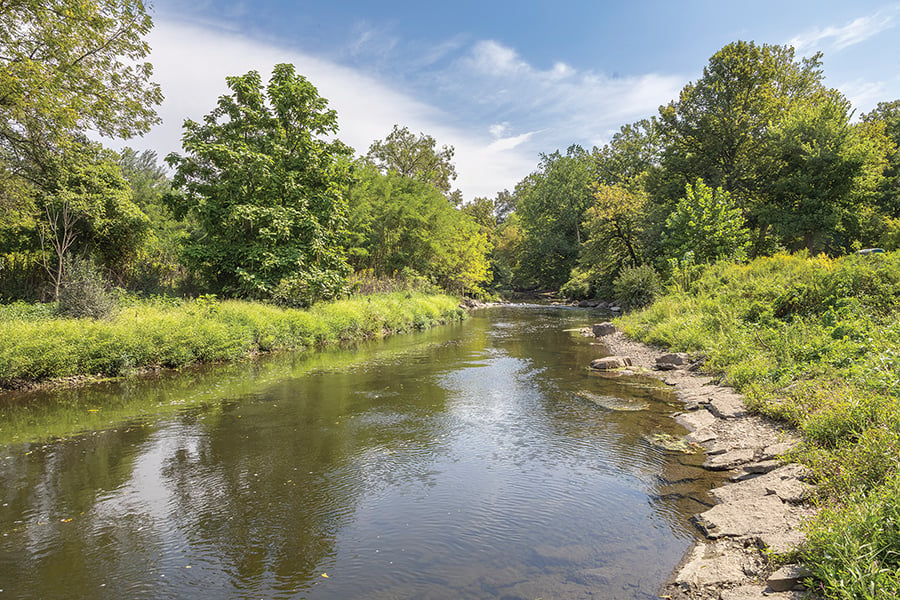
In September the Forest Preserve District joined DuPage County Stormwater and the U.S. Environmental Protection Agency at McDowell Grove to celebrate the deletion of the West Branch DuPage River corridor from the EPA’s Superfund list.

During the 1930s, low-level radioactive thorium waste from commercial mineral-extraction operations made its way into Kress Creek and the West Branch DuPage River. From 2005 to 2012, a multiagency team working stretch by stretch along 8 miles diverted the flow of the river and removed 129,000 cubic yards of contaminated sediment. After a mandatory follow-up period by the EPA, the site was deleted from the list.

The arduous task cleaned up the waterway, but it also allowed ecologists a once-in-
a-lifetime opportunity to rebuild it from the riverbed up, removing artificial dams; creating natural twists and turns, pools, and riffles; and building healthy underwater habitat for an array of aquatic wildlife. It also created over 20 acres of wetlands of shallow depressions and mounds filled with native plants that store runoff and river swells until they can seep into the ground, areas that also serve as homes for frogs, toads, water birds, and aquatic insects.


F officials
F river

Mayslake Hours

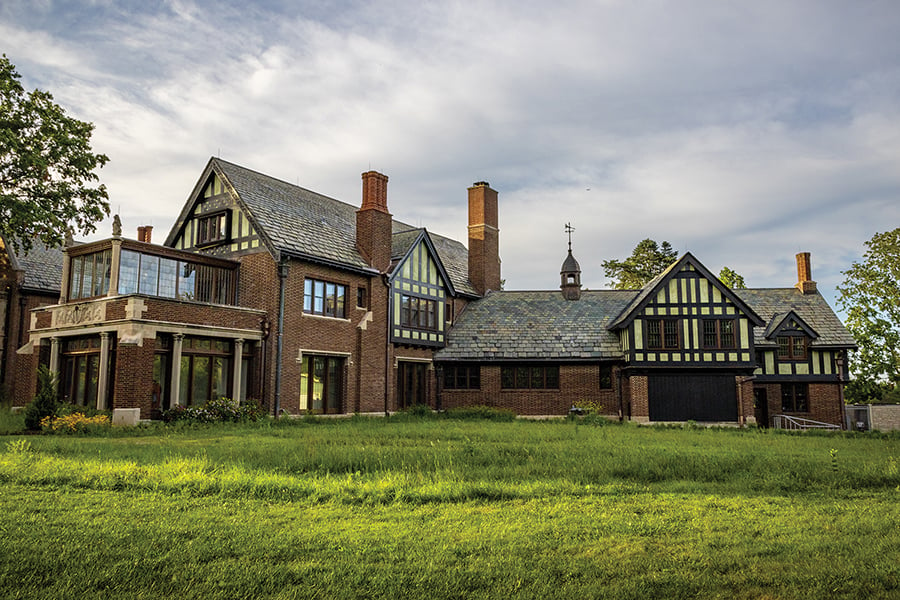
After being closed since the beginning of the year, Mayslake Hall at Mayslake Peabody Estate will be reopening to the public this fall. Starting Oct. 21, the hall will be open Wednesday through Saturday 10 a.m. to 2 p.m. and closed on Sundays, Mondays, and Tuesdays.


F mayslake

Thank You for Being a Friend

The Friends of the Forest Preserve District of DuPage County advances the Forest Preserve District’s vision through philanthropic endeavors and fundraising to benefit habitat restoration, wildlife preservation, and educational and recreational programs.
The Friends gratefully acknowledges those who gave $500 or more in April, May, and June 2026.

Learn more or donate on the Friends webpage, or mail your gift to the Friends of the Forest Preserve District of DuPage County, 3S580 Naperville Road, Wheaton IL 60189. To discuss your giving plans or learn about Friends’ board service opportunities, please contact Partnership & Philanthropy at 630-871-6400 or fundraising@dupageforest.org

0U3A8747
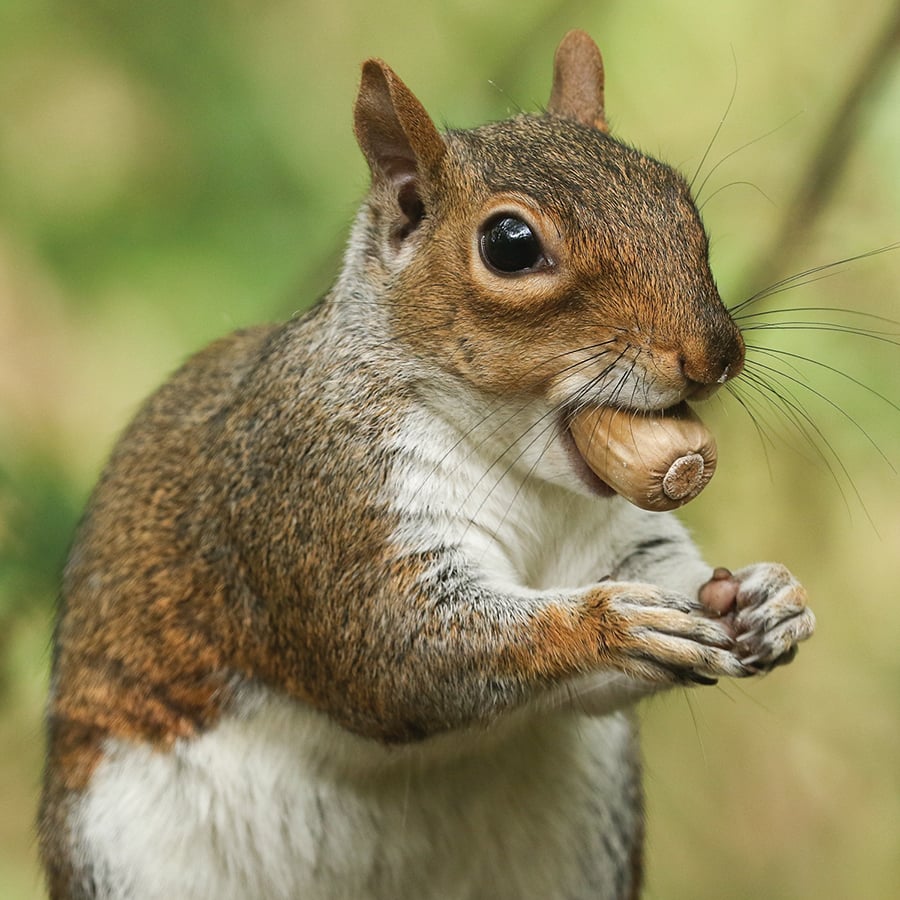
A grey squirrel holds a nut in its mouth while standing on its hind legs.

Squirrel!

They are menacing foes to a furry  four-legged Oscar, Maxx, Moose, or Chili Dog, but DuPage County’s tree squirrels — eastern gray, fox, American red, and southern flying — have some truly impressive traits. Here are 10 you may not know.

  • The Flick Test

    To determine if a nut is fresh, a fox or gray squirrel will put it in its mouth and flick its head, causing the nut to rattle. This helps the squirrel determine the weight of the nut and, along with smell, its freshness. If it rattles a lot it may be dried up or infested with insect larvae and not worth stashing away for winter. In the case of larvae, the squirrel will usually eat it right then for a quick protein snack.

  • Hard-Wired Whiskers

    A squirrel’s whiskers, called “vibrissae,” are rooted in sensitive follicles that amplify the slightest touch and send signals straight to the brain. Squirrels even have them on their forearms. They help squirrels navigate and register textures.

  • A Coat of a Different Color

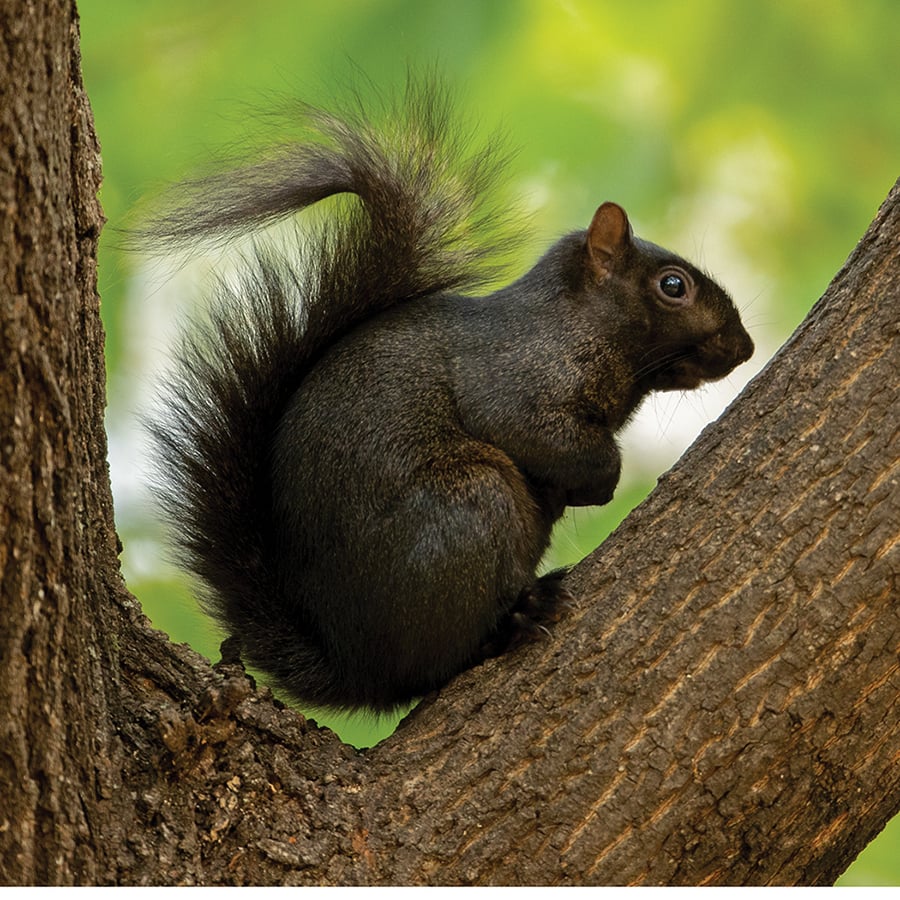
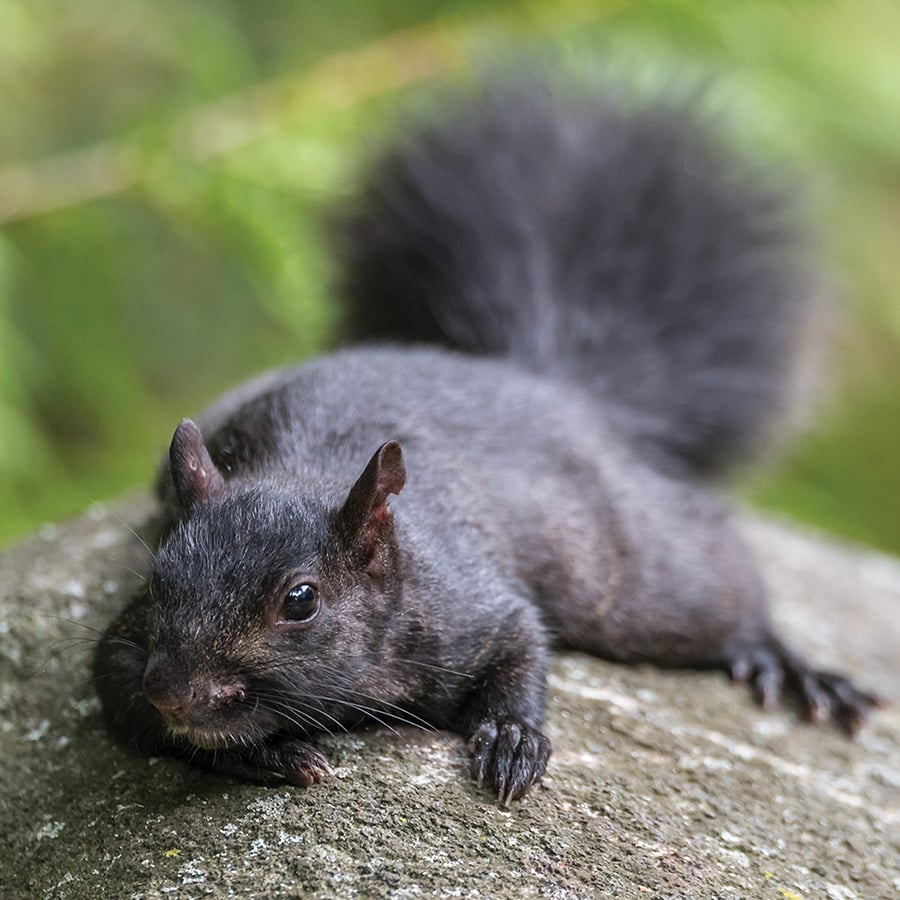
    The black squirrels people sometimes see in DuPage are just eastern gray squirrels with “melanism,” an increased amount of dark pigmentation. This black variation is dominant in densely shaded northern forests (think Michigan). Researchers believe it not only provides better camouflage but may also help squirrels absorb more heat on sunny winter days.

  • Hey, Rocky! 

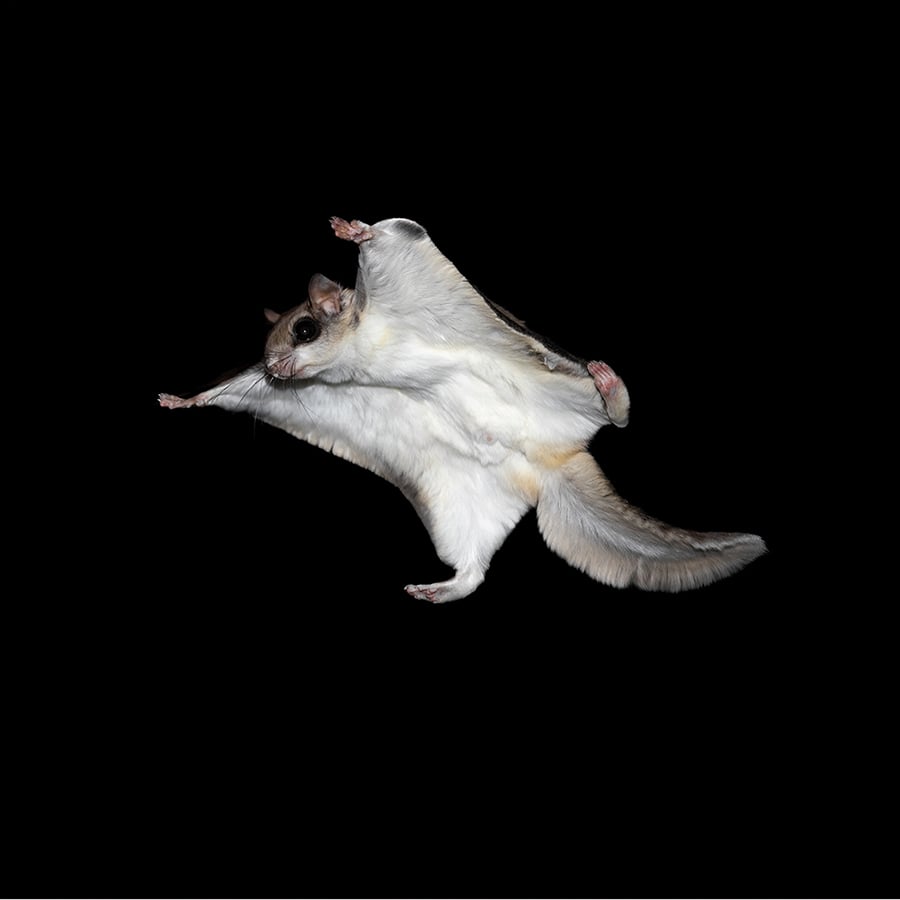
    Southern flying squirrels don’t actually fly; they glide. A flap of furry skin called a “patagium” stretches between their wrists and ankles and serves as a gliding membrane. As a squirrel launches off a tree, it stretches its limbs and uses its patagium like a parachute to silently glide to the next trunk. It can coast as far as 100 feet, but 20 to 30 feet is more common. Super fun bonus fact: These squirrels glow bubblegum pink under ultraviolet light, although researchers have yet to determine why they developed this trait.

  • Hang Tight 

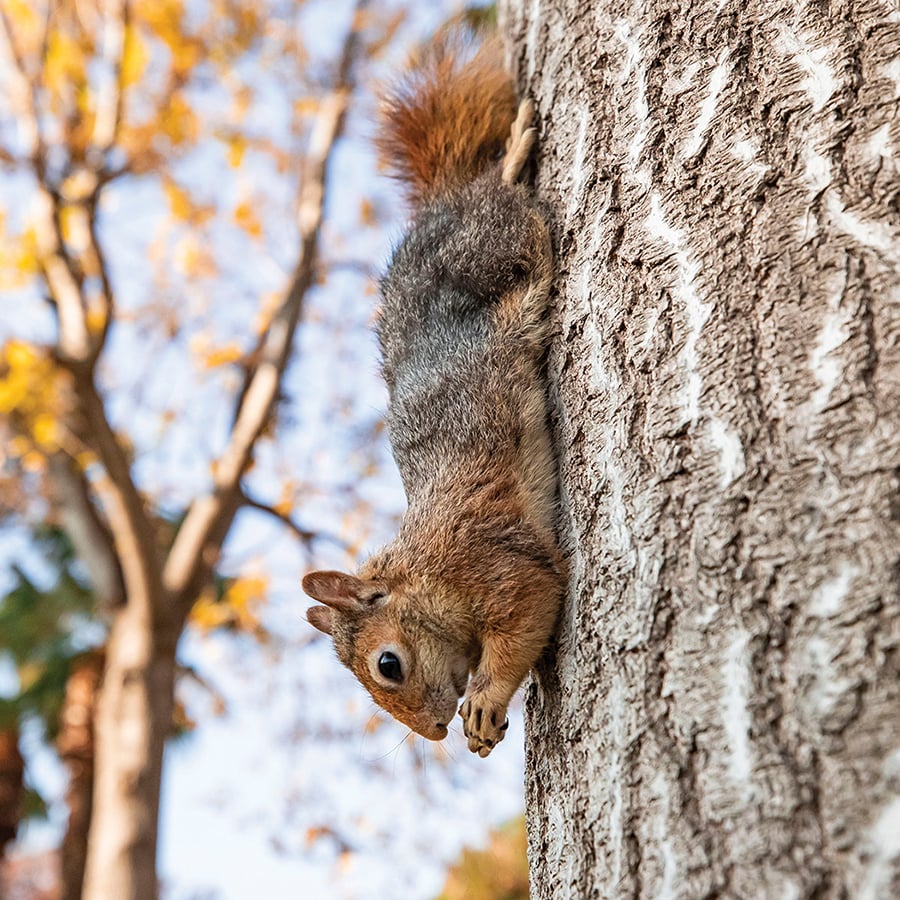
    Tree squirrels can rotate their back feet 180 degrees, allowing them to run down trees (and even hang) head-first. This helps them keep a better eye out for predators on the way down.

A close-up shot of a squirrels face shows its long, dark whiskers.
An eastern gray squirrel is perched on a tree branch.
A flying squirrel takes flight in the night.
A fox squirrel hangs upside down on a tree trunk.
  • Fox or Gray?  
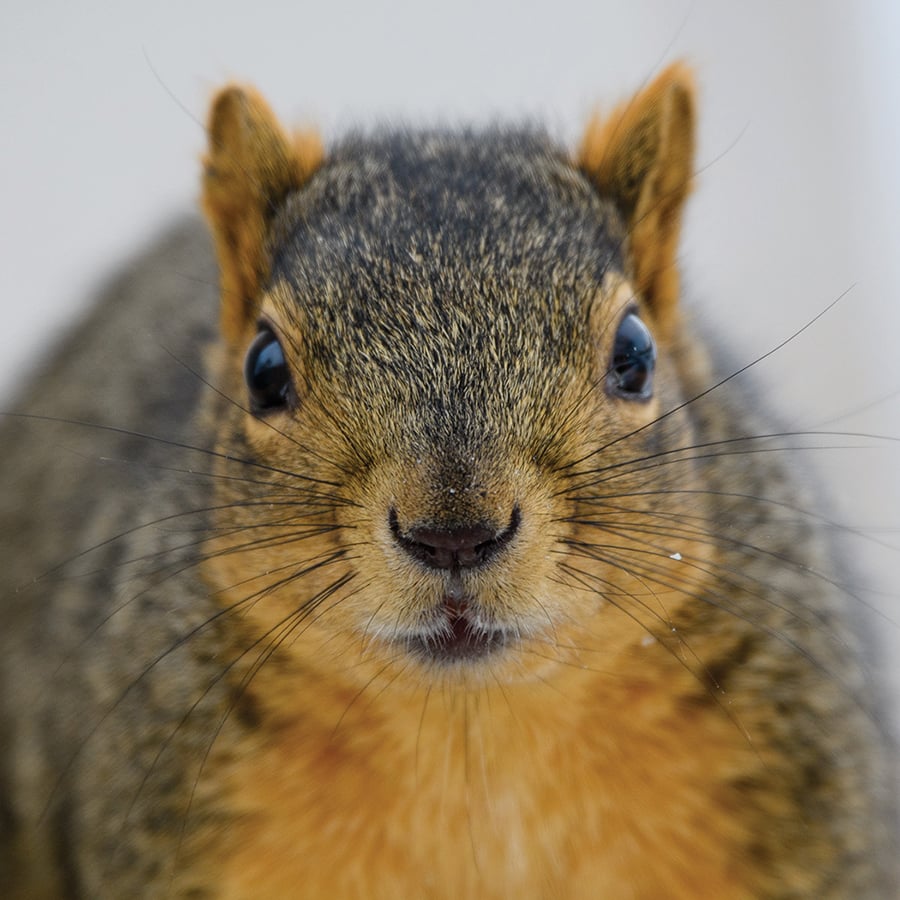
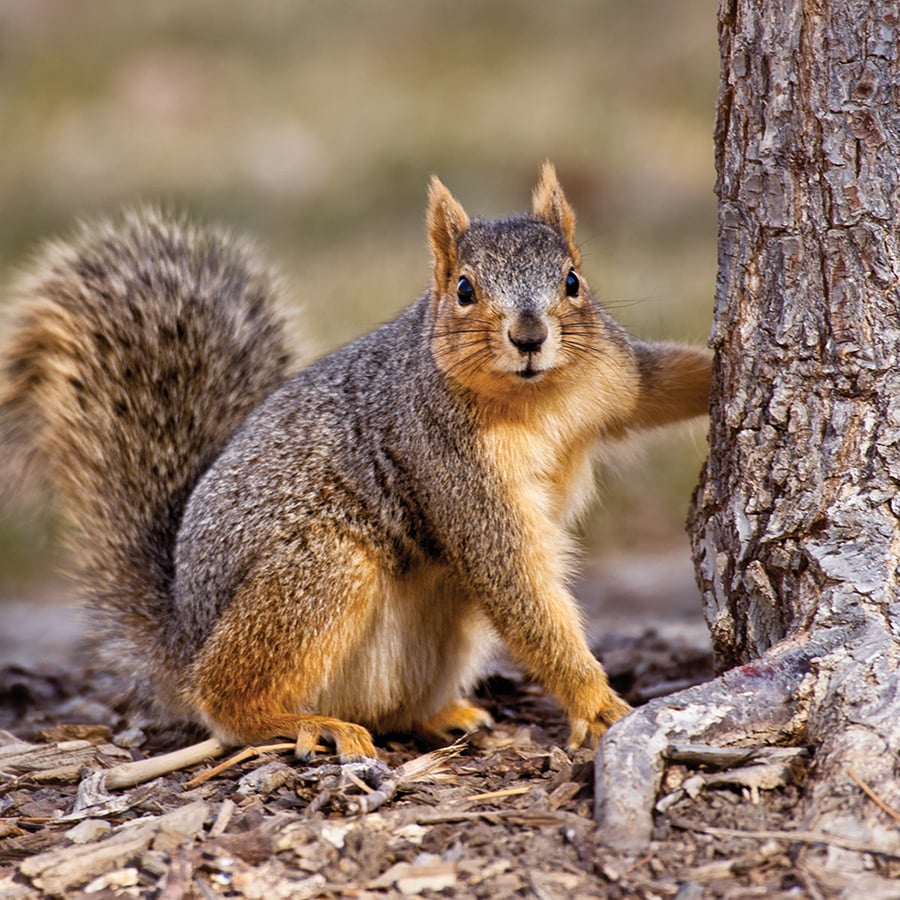
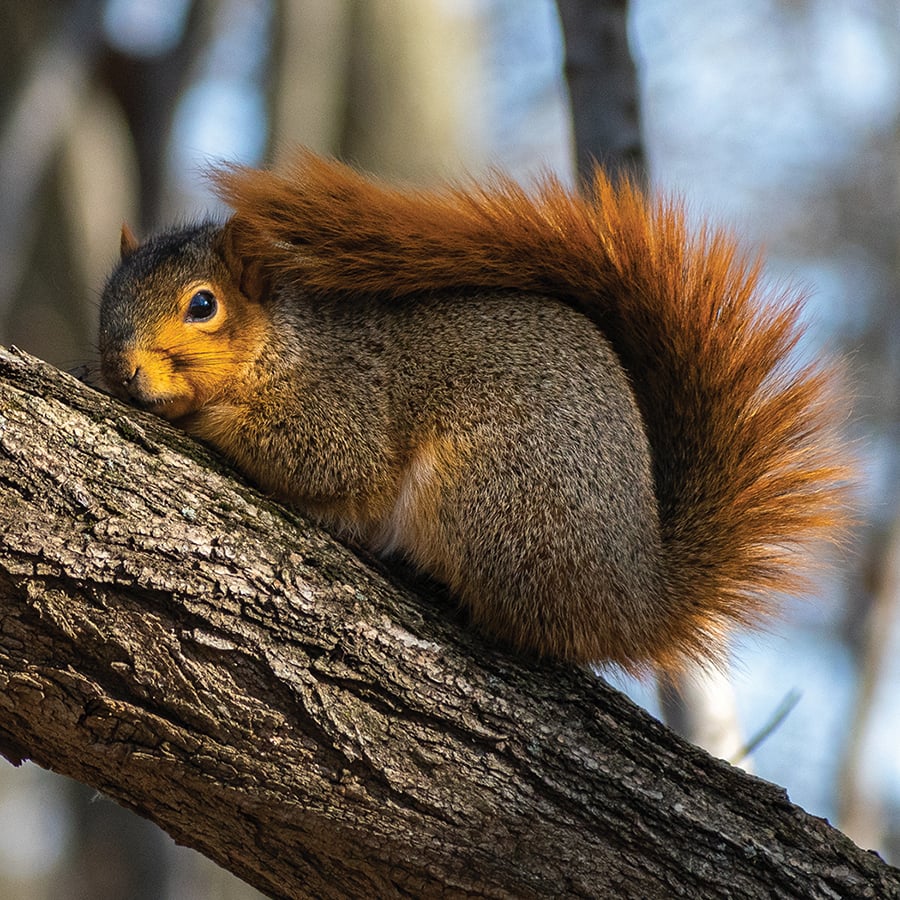
    Fox and eastern gray squirrels are quite similar. Generally, though, gray squirrels are whitish underneath. Fox squirrels, like the one to the right, have orangish or tan bellies.
  • Just Chillin’  
    Don’t be surprised if you see a squirrel “splooting” on a hot summer day. (Yes, that’s what researchers call it, although it’s also known as “heat dumping.”) Unlike humans, squirrels can’t sweat to cool down. So aside from seeking shade, a squirrel will spread its body along a cooler surface to lower its temperature.
  • Chatter Boxes
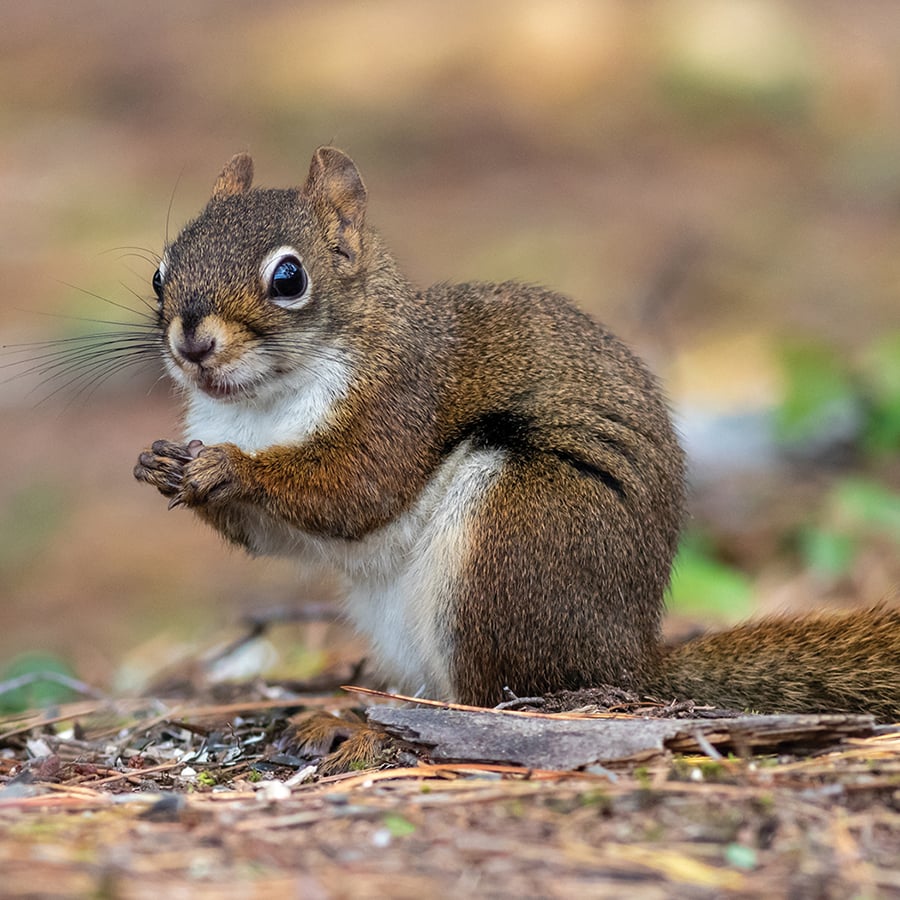
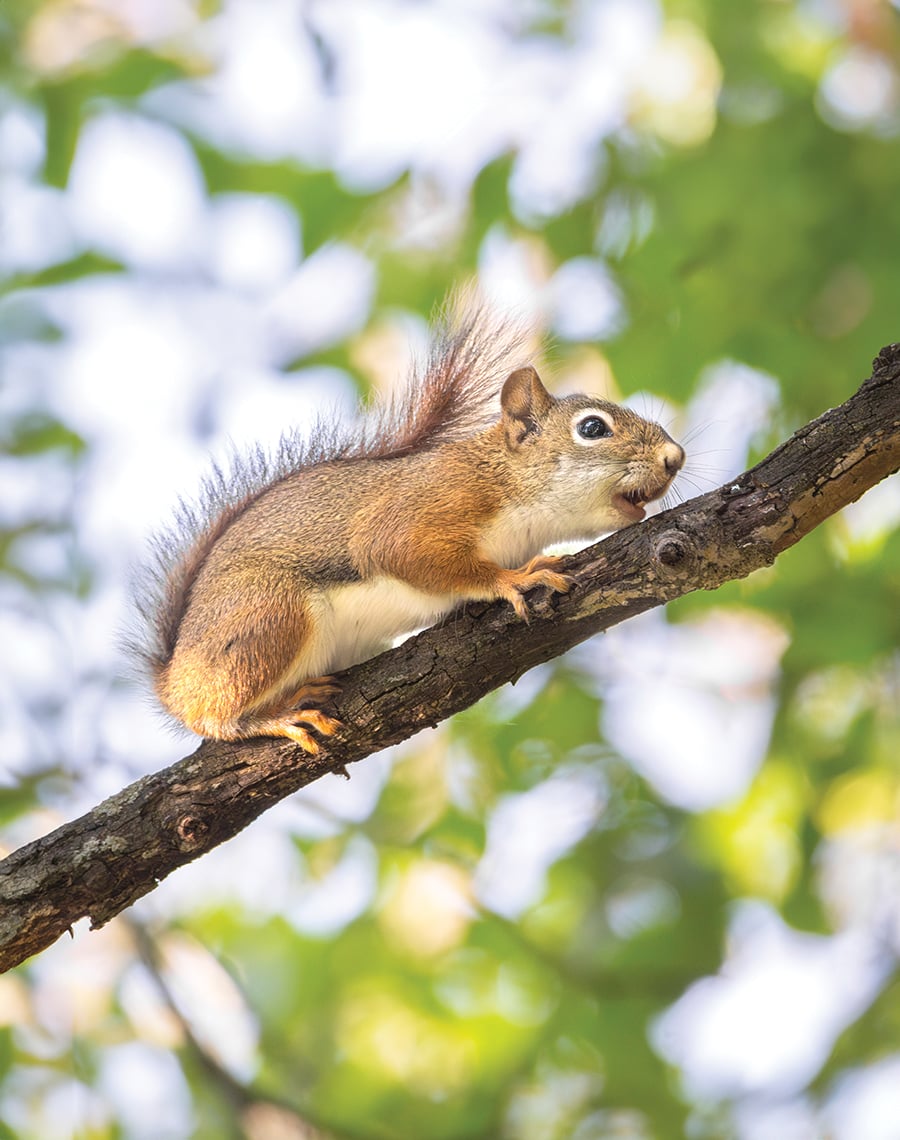
    At about a foot long (tail included), adult American red squirrels are often mistaken for juveniles. They’re easy to ID, though, by the white rings around their eyes and their rapid, trilling, high-pitched chatter, which they use to signal territories and to tell other wildlife (and wildlife watchers) to move along.
  • Art of Deception
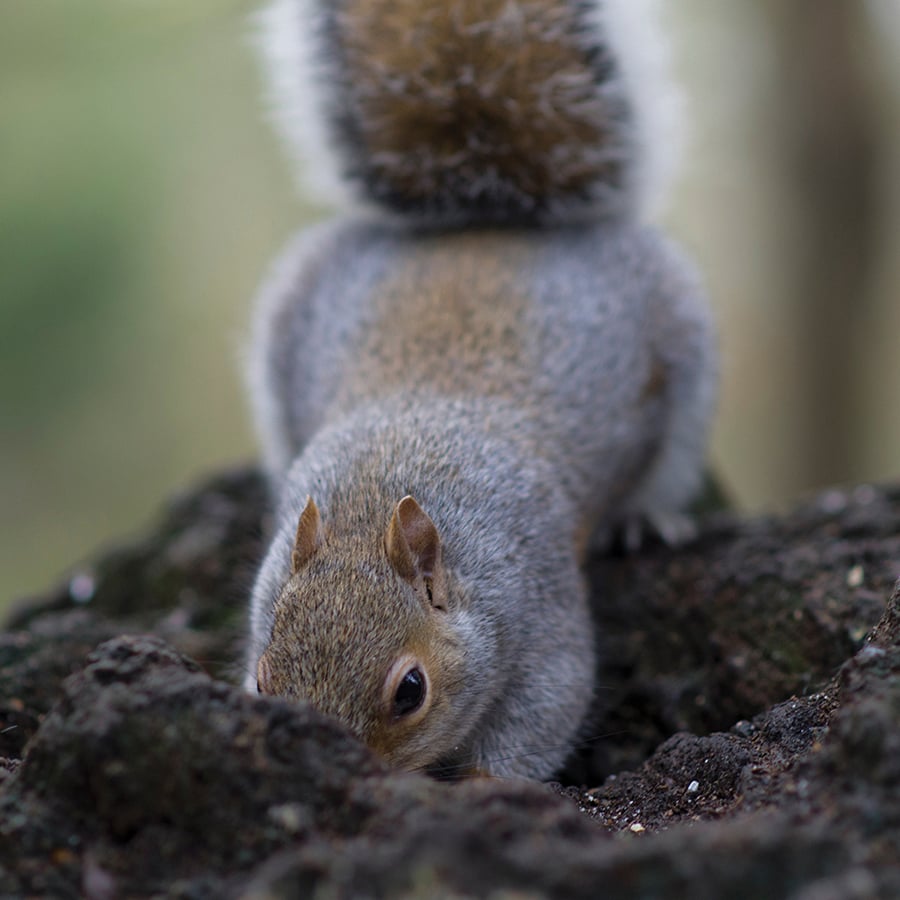
    Eastern gray and fox squirrels practice “deceptive caching.” If they see another animal watching them, they’ll dig a hole and pretend to bury their food but will keep their stash safely tucked inside their mouths. This can cause a hungry bird or other competitor to waste time digging for food that isn’t there and allow the squirrel to hide its cache unseen somewhere else.
  • Shady Characters
    Squirrels are members of the aptly named Sciuridae family, which comes from the Greek skia, meaning “shadow” or “shade,” and oura, meaning “tail.”
A fox squirrel stands with one appendage resting on a tree.
A gray squirrel lays on a tree branch.
An American red squirrel stands at attention.
A gray squirrel digs to hide food.
A fox squirrel covers its back with its tail.
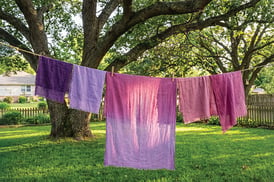
Dyed fabrics dry on a clothesline.


Embracing Nature's Colors

If you’ve seen the Forest Preserve District’s The Work of Many Hands, you know how heritage interpreters and volunteers used beetles and indigo plants to dye raw wool for an American flag. (If you haven’t, it’s truly impressive and worth the watch at dupageforest.org/america-250.) If the vibrant natural elements they used make you wonder what else in nature can give such colors, luckily you won’t have to look far for an answer. They may be growing in your own backyard!

First, though, there are a few points to cover. Yes, making dyes from native plants is fun, but no, you can’t get the ingredients from your local forest preserve. It’s illegal. However, you (or a friend who’s willing to share) may already have some of the plants featured here. Others are available each May at the District’s annual native plant sale. Also, this is just an introduction to a rewarding nature-based hobby. There’s boiling and timing and things called “mordants,” which you’ll read about later, but lots of great books and websites can help you get the most — and safest — results from your efforts. All that being said, let’s create!

Before synthetic dyes arrived in the mid-1800s, humans used plants and minerals to adorn their wardrobes. Archaeologists have found microscopic black, gray, turquoise, and pink flax fibers dating back 36,000 years at the border of Europe and Asia in the Republic of Georgia, fibers most researchers agree were intentionally dyed.

Natural dyes are still prevalent today, and many come from plants native to DuPage County. If you’re going to add plants to your yard for this or any purpose, “going native” has several benefits. These plants evolved in northern Illinois over thousands of years, adapting to regional soils and climate. As a result, they’re more pest-resistent than their cultivated counterparts and require less maintenance and water to grow well in local gardens.

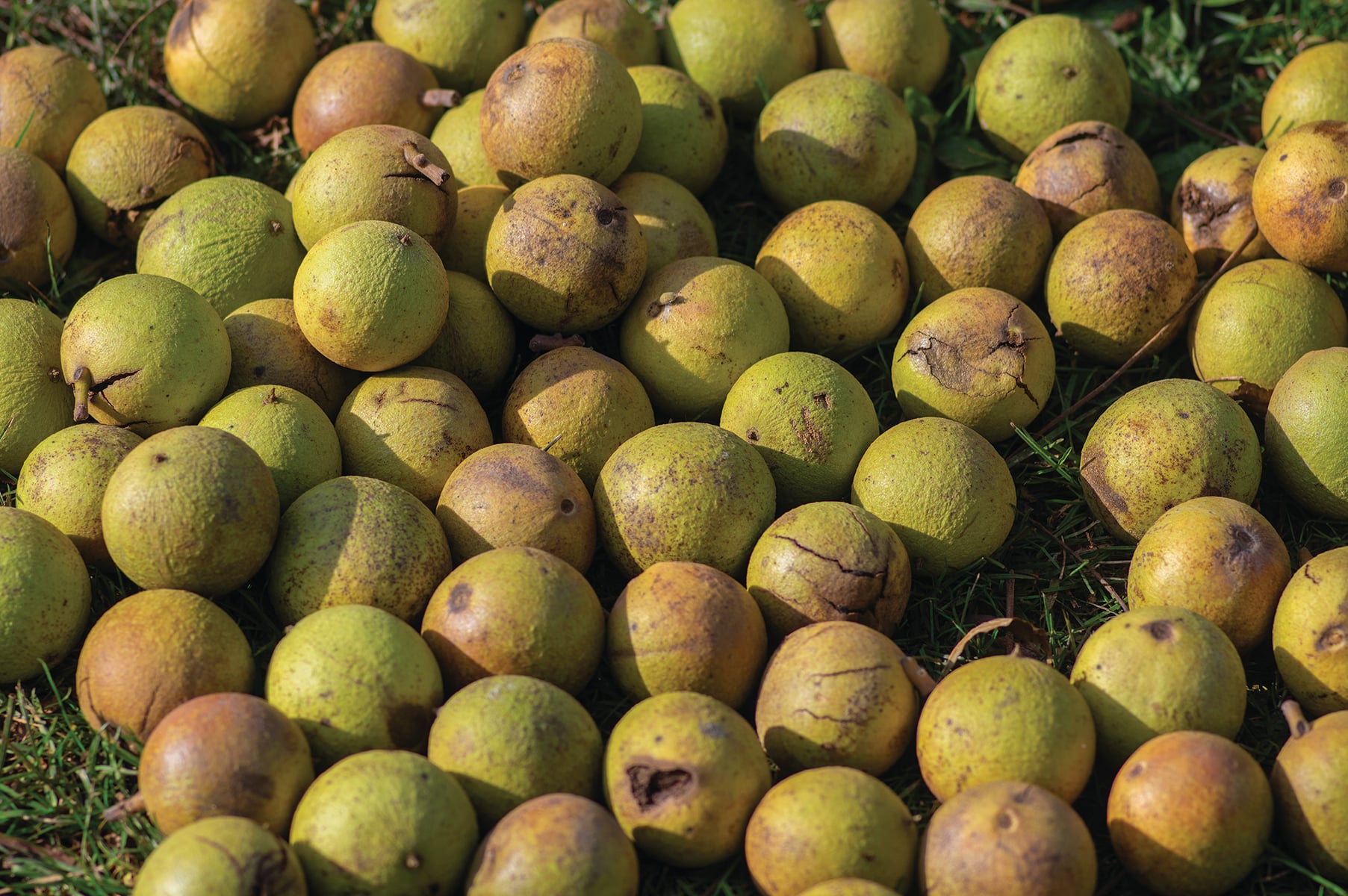
A pile of black walnuts with green hulls rest on the ground.

Collecting black walnuts when the hulls are still green is key. It’s actually the hulls that contain the tannins that dye fabrics earthy browns. But be careful. Black walnuts stain hands, clothes, and countertops, so this project is best done outdoors in old clothes and gloves.
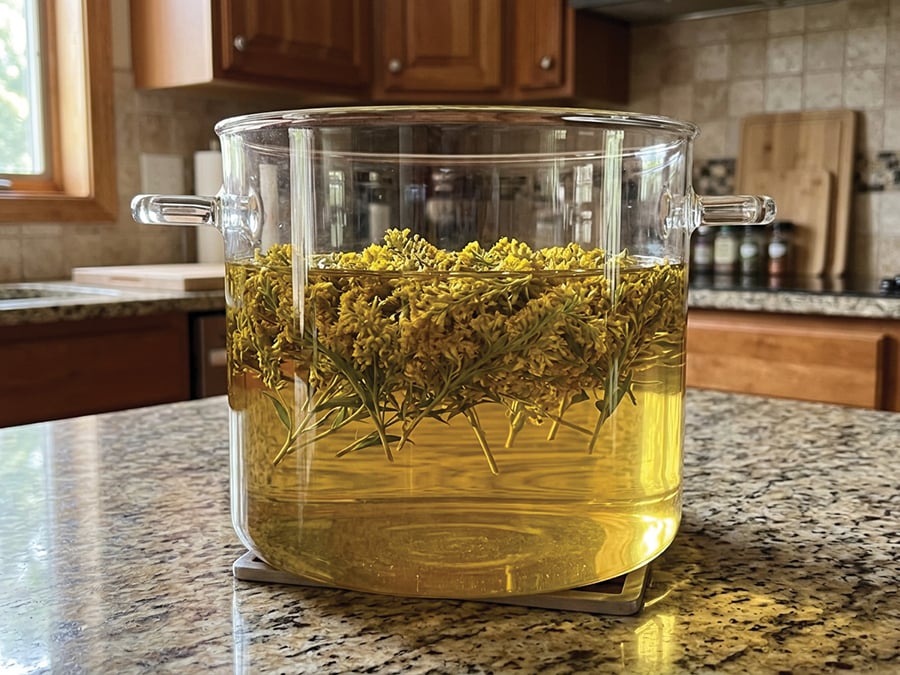
Goldenrod flowers steep in a glass container.

DuPage County has several native species of goldenrod that create natural dyes. Steeping the flowers in warm water releases the vibrant yellows that turn plain white fabrics into buttery colors.
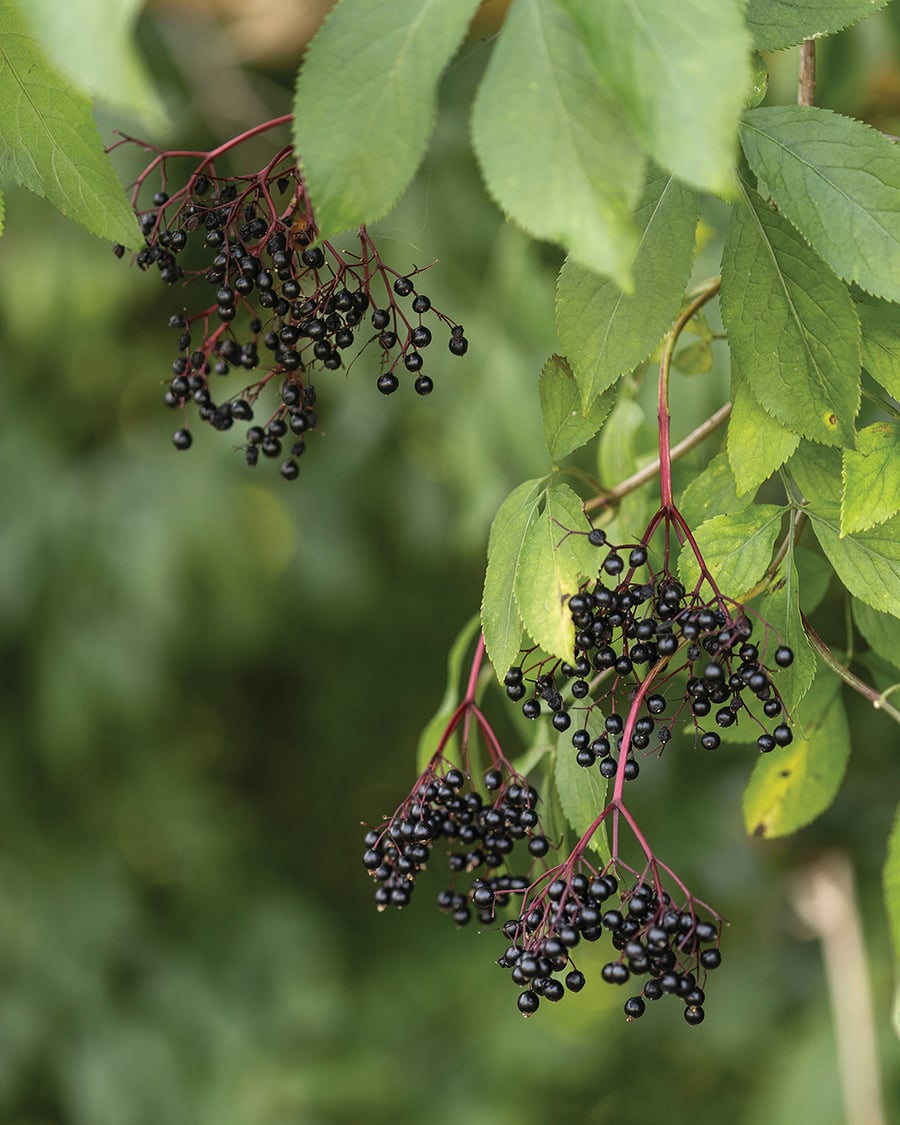
A native shrub that works well as a dye is elderberry, which grows in shade to full sun and adorns gardens with umbrellas of delicate white flowers in June and July. In late summer it fills with clusters of dark plum berries that are favored not only by hungry birds but also by fans of natural dyes who love the pinks and purples they produce.

Illinois’ native eastern prickly pear cactus (an interesting conversation piece in any sunny garden with dry soil) also flowers in June and July, although with showy yellow petals. The fleshy vase-shaped fruits that follow provide even more sources for pink and purple dyes.

Look at the late-summer blooms of Canada, elm-leaved, Riddell’s, and other native goldenrods, and you’ll see why people who dye grow these flowers for their warm yellows. Dyeing with goldenrod is easy, too. It’s a lot like making tea. Soak the flowers in a glass jar with warm water (not boiling) so the water can extract the pigments. Place a piece of fabric in the jar for a few hours until it reaches the desired shade, and hang to dry.

If you have a black walnut tree in your yard you’re probably already raking the yellowish-green-hulled nuts before you mow, so why not use a few to make some earthy brown dyes? The dye actually comes from that outer hull, also called a husk, and not from the tan nut inside. The hull contains chocolate-colored “tannins” that leach into water after sitting in a bucket for one to two days. Remove the walnuts, and then soak a piece of tea cloth in the dyed water for a few hours to a few days.

When planning a natural plant-dye project, picking the right fabric and preparing it is as important as picking the right plant. Dyes adhere better to animal fibers like wool because animal cells have soft walls. Plant cells in fibers like cotton and linen are made of stiff cellulose, which is harder for dyes to penetrate. First treating fabrics with a “mordant” softens those cells. (The word, interestingly, is from the Latin mordare, meaning “to bite,” which likely referred to its ability to help dyes “bite” onto fabrics.)

Mordants are common in the dyeing process, but as some are made of salts and metals, always carefully follow all instructions.
When it’s time to clean your finished piece, hand washing is best. You may also need to re-dye items every two or so years as the color will likely fade with washing and exposure to sun (but that just means a promise of endless dyeing fun!)

There’s a world of color in your garden ready to be brought in, so take some time to explore these new ways to do so. 

Small dark elderberries grow from a green plant.

Fresh elderberries not only attract birds but also create pink and purple natural dyes.
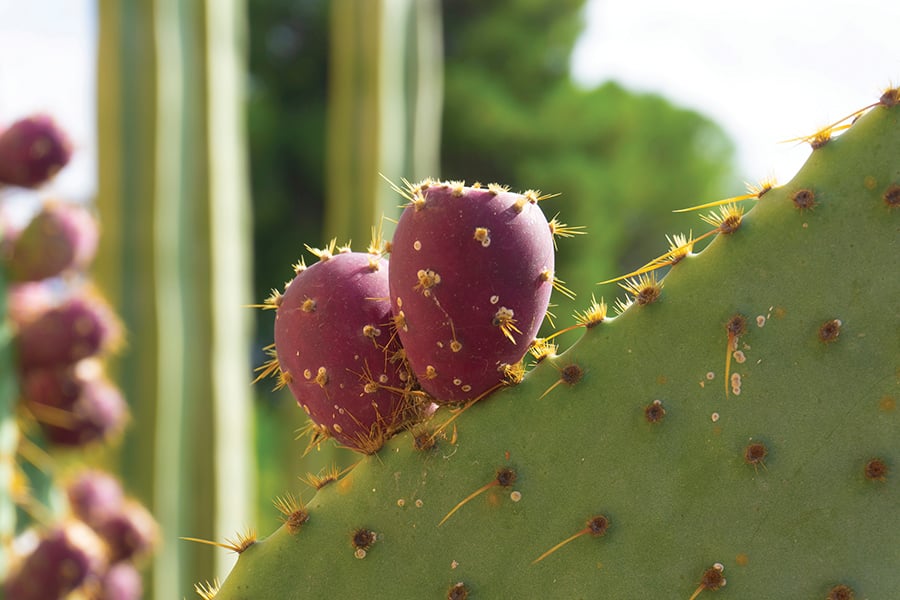
Mauve-colored fruit grows from a cactus.

After its yellow blooms fall, eastern prickly pear produces mauve fruits popular with people who make natural dyes.
Photo Credits: Squirrel header Sandra Standbridge-Adobe; squirrel whiskers Chris Sichko; gray squirrel Stan-Adobe; flying squirrel Travis-Adobe; hanging squirrel Suzi-Adobe; fox squirrel Stan-Adobe; laying gray Kirk Hewlett-Adobe; red squirrel rabbitti-Adobe; digging squirrel Mark-Adobe; curled squirrel Albert Jackson-Adobe; walnuts Iva-Adobe; elderberry Cavan-Adobe; prickly pear Kateryna-Adobe;

Download the entire issue!

F cover Conservationist-Fall-2026-1